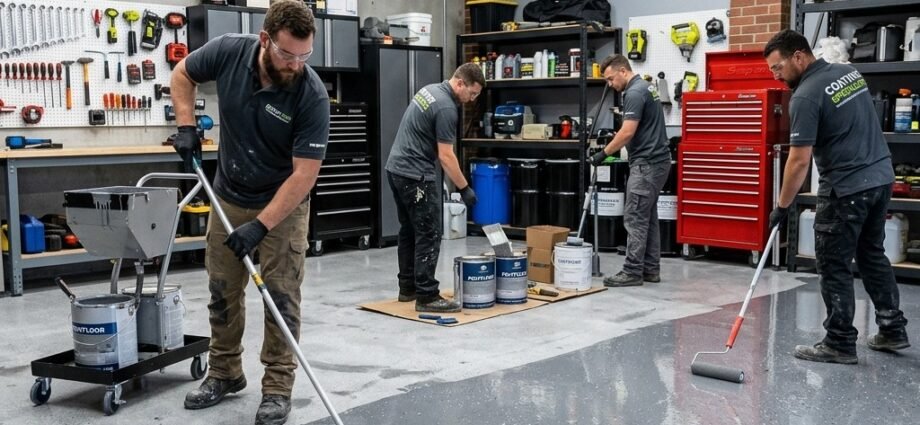
Most garage floors don’t get much attention—until they start showing cracks, stains, or that chalky, worn-out look that no amount of sweeping can fix. At that point, the question isn’t whether to do something about it, but what to do. And if you’ve been researching your options, one solution keeps rising to the top: polyaspartic coating.
Carbon Concrete Coatings has helped countless homeowners transform dull, deteriorating garage slabs into surfaces that genuinely impress. Here’s why polyaspartic consistently stands out—and why it might be exactly what your garage needs.
What Makes Polyaspartic Different From Other Coatings?
Not all floor coatings are created equal. Epoxy has been the go-to for years, but polyaspartic technology has quietly outpaced it in nearly every measurable way.
Polyaspartic coatings cure significantly faster than epoxy—often within hours rather than days. That speed alone is a major advantage for homeowners who can’t afford to have their garage out of commission for an extended period. But fast curing isn’t the only edge.
Here’s what sets polyaspartic apart:
- UV stability: Unlike epoxy, polyaspartic doesn’t yellow or fade under sunlight. Your garage floor will look as good years from now as it does on installation day.
- Temperature flexibility: Polyaspartic can be applied in both hot and cold conditions, giving installers far more flexibility than epoxy allows.
- Superior durability: The coating resists abrasions, chemicals, oil, and heavy impact—the exact conditions a garage floor faces every single day.
- Thicker protective layer: A high-quality polyaspartic application bonds tightly to concrete and forms a dense, resilient surface that holds up under real-world use.
Why Your Garage Floor Deserves This Investment
Your garage handles more daily wear and tear than almost any other area of your home. Cars drip fluids. Tools get dropped. Foot traffic, bike tyres, and storage racks all take their toll. A bare concrete floor absorbs all of that abuse, and over time, it shows.
Polyaspartic coating changes the equation entirely. Rather than a surface that slowly degrades, you get one that actively resists damage. Spills wipe up cleanly. Tire marks don’t leave permanent stains. Cracks and pitting are sealed beneath a smooth, solid finish.
There’s also the aesthetic factor. Modern polyaspartic finishes come in a wide range of colours and decorative flake options, turning what was once a purely functional space into something worth showing off. Whether you want a sleek, solid tone or a textured, flake-blended look, the result is a floor that genuinely elevates the feel of the entire garage.
For homeowners planning to sell, an upgraded garage floor makes an immediate impression. For those staying put, it adds daily comfort and pride in a space that often goes overlooked.
What the Installation Process Looks Like With Carbon Concrete Coatings
A professional polyaspartic installation isn’t just about pouring coating over concrete. The preparation is what separates a floor that lasts from one that peels within a year.
Carbon Concrete Coatings follows a proven process:
- Surface preparation: The concrete is diamond-ground or shot-blasted to open up the pores, ensuring maximum adhesion.
- Crack and joint repair: Any existing damage is addressed before coating begins, so problems don’t migrate through the finished surface.
- Base coat application: The polyaspartic base coat is applied evenly and allowed to cure.
- Decorative broadcast (if selected): Colour flakes are scattered across the wet base coat to create texture and visual depth.
- Top coat sealing: A clear polyaspartic top coat locks everything in, adding gloss, protection, and slip resistance.
The entire process can typically be completed in a single day—and the floor is ready for light foot traffic within hours.
How Long Will a Polyaspartic Floor Coating Last?
Longevity is one of the strongest arguments for polyaspartic over competing options. A professionally installed polyaspartic floor, properly maintained, can last 15 to 20 years or more. Epoxy installations, by comparison, often begin to show wear within 5 to 10 years, especially in high-traffic garages or climates with significant temperature swings.
The key to maximising lifespan is proper installation from the start. Cutting corners on surface prep or using low-grade materials will undermine even the best coating chemistry. That’s why working with an experienced team makes all the difference.
Why Carbon Concrete Coatings Is the Right Choice
Polyaspartic garage floor coating that protects your concrete from chemical spills, tyre wear, and heavy impact while giving your garage a clean, polished look that holds up for years without fading or peeling is exactly what Carbon Concrete Coatings delivers on every project. The team brings the expertise, materials, and attention to detail that this type of work demands—no shortcuts, no compromises.
Every installation is handled by professionals who understand that a garage floor is more than a slab of concrete. It’s a surface that needs to perform under pressure, look sharp through years of use, and deliver real value from the moment the job is done.
From the initial consultation to the final top coat, Carbon Concrete Coatings is committed to results that exceed expectations. If your garage floor is overdue for an upgrade, this is the team to call.
Frequently Asked Questions
How long does polyaspartic garage floor coating take to cure?
Polyaspartic coatings cure much faster than epoxy. Most installations allow for light foot traffic within 6 to 8 hours, with full vehicle traffic typically safe within 24 hours.
Is polyaspartic coating worth the cost compared to epoxy?
For most homeowners, yes. Polyaspartic costs more upfront, but its longer lifespan, UV resistance, and faster cure time make it the better long-term value—especially in climates with extreme temperatures.
Can You Apply Polyaspartic Coating Over an Existing Epoxy Floor?
In some cases, yes—but it depends on the condition of the existing epoxy. A professional assessment is needed to determine whether the surface requires removal or can be coated over directly.
Will the coating be slippery when wet?
A quality polyaspartic installation includes a textured top coat that provides slip resistance, making it safe for wet conditions like rain or washing your car.
What’s the Best Way to Care for a Polyaspartic Garage Floor?
Maintenance is minimal. Regular sweeping and occasional mopping with a mild cleaner is all it takes to keep the surface looking its best for years.
READ MORE: clocktimes