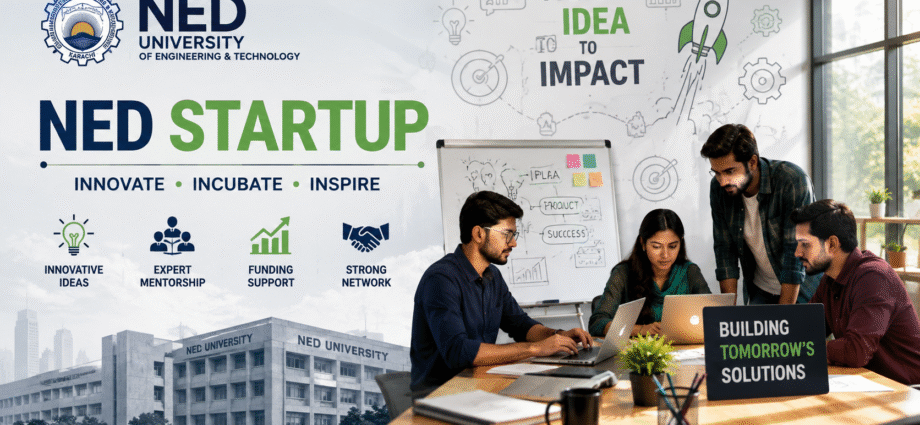
The NED startup ecosystem has become one of the most recognised centres for innovation and entrepreneurship in Pakistan. Over the past few years, NED University has created an environment where students, graduates, researchers, and aspiring entrepreneurs can transform creative ideas into successful businesses. Instead of simply focusing on classroom education, the university encourages practical problem-solving, product development, and business creation. Through incubation facilities, mentorship, networking opportunities, and access to industry experts, startups receive the support they need during the most challenging stages of their journey. As technology continues to reshape industries worldwide, the NED startup ecosystem plays an increasingly important role in helping innovators develop solutions that benefit businesses, communities, and the economy.
What Is a NED Startup?
A NED startup refers to a business venture founded, supported, or incubated within the entrepreneurial ecosystem developed by NED University of Engineering and Technology. These startups are typically driven by innovative ideas in technology, engineering, healthcare, education, artificial intelligence, robotics, renewable energy, manufacturing, and digital services. Many founders begin with a simple concept designed to solve a real-world problem before refining it into a scalable business model. Rather than working alone, entrepreneurs gain access to experienced mentors, collaborative workspaces, technical guidance, and business development resources that significantly improve their chances of success. This structured support allows startups to move from early-stage ideas to market-ready products with greater confidence.
Why the NED Startup Ecosystem Is Growing
Several factors have contributed to the rapid growth of the NED startup community. Universities have become important centres for innovation because they combine research, technical expertise, and youthful creativity. Students often identify practical challenges during their academic projects and develop solutions with commercial potential. The university encourages entrepreneurial thinking by organising workshops, competitions, startup events, and innovation challenges where participants receive valuable feedback from experienced professionals. These activities help founders improve their ideas while building confidence in presenting them to investors and industry leaders. The growing interest in digital transformation has also increased demand for innovative startups capable of solving modern business challenges.
Business Incubation Centre and Entrepreneurial Support
One of the strongest pillars of the NED startup ecosystem is its Business Incubation Centre. The incubation program is designed to support entrepreneurs during the early stages of business development when resources are often limited. Participants receive office facilities, meeting spaces, internet access, mentorship, and opportunities to collaborate with fellow innovators. Business experts guide founders in developing sustainable business models, validating market demand, improving financial planning, and preparing investor presentations. Entrepreneurs also receive practical advice on branding, product development, customer acquisition, and long-term growth strategies. This supportive environment allows startups to focus on innovation while reducing many of the operational challenges that new businesses commonly face.
Innovation Through Research and Technology
Research plays a major role in the success of every NED startup. Unlike traditional businesses that often rely on existing products, startups emerging from research institutions focus on developing new technologies and improving existing solutions. Engineering students collaborate with faculty members to transform research projects into commercially viable products. Fields such as artificial intelligence, machine learning, Internet of Things (IoT), automation, smart infrastructure, healthcare technology, and renewable energy provide countless opportunities for innovation. These research-driven startups often introduce practical solutions that improve productivity, reduce operational costs, and enhance quality of life across multiple industries.
Funding Opportunities for NED Startups
Securing funding remains one of the biggest challenges for any new business. Fortunately, the NED startup ecosystem introduces entrepreneurs to various funding opportunities through startup competitions, investor networking events, business pitch sessions, innovation grants, and accelerator programs. While many founders initially finance their businesses independently, additional investment becomes essential for expanding operations, hiring skilled professionals, and entering larger markets. Investors often look for startups with strong leadership, scalable business models, innovative products, and clear market demand. Effective mentorship helps founders prepare convincing business presentations that improve their chances of attracting investment while also strengthening their financial planning and long-term strategy.
Successful NED Startup Examples
The growing reputation of the NED startup ecosystem is reflected in the achievements of several successful ventures that have gained national recognition. Many startups have secured awards, investment opportunities, and industry partnerships by addressing practical problems with innovative solutions. Some businesses focus on improving digital accessibility, while others specialise in e-commerce, logistics, educational technology, healthcare, and engineering services. These success stories demonstrate that strong technical knowledge combined with effective business planning can produce companies capable of competing in both local and international markets. Their achievements also inspire future entrepreneurs to pursue innovation with confidence and determination.
Essential Skills for Building a Successful NED Startup
Launching a successful NED startup requires much more than technical expertise. Founders must develop a broad range of skills that support sustainable business growth. Leadership, communication, teamwork, financial management, customer research, marketing, and strategic planning all contribute to long-term success. Entrepreneurs should also remain flexible because customer needs and market conditions constantly evolve. The ability to accept constructive feedback, refine products, and adapt business strategies often determines whether a startup succeeds or struggles. Continuous learning remains one of the most valuable qualities for entrepreneurs operating in today’s rapidly changing technology landscape.
Challenges Faced by NED Startups
Although the NED startup ecosystem provides valuable support, entrepreneurs still encounter numerous obstacles during their business journey. Limited financial resources, intense market competition, customer acquisition difficulties, product development delays, and operational management challenges can slow business growth. Regulatory compliance, intellectual property protection, and hiring experienced professionals may also become difficult for young companies. However, startups that remain committed to continuous improvement, market validation, and customer satisfaction are often able to overcome these barriers. Learning from failures, testing new ideas, and maintaining persistence are essential characteristics shared by many successful entrepreneurs.
The Future of the NED Startup Ecosystem
The future looks highly promising for the NED startup ecosystem as technology continues to create new opportunities across every industry. Emerging fields such as cybersecurity, data science, green technology, robotics, financial technology, and digital healthcare are expected to generate increasing demand for innovative solutions. Greater collaboration between universities, private companies, investors, and government organisations will likely strengthen startup development even further. As more entrepreneurs gain access to mentorship, funding, research facilities, and commercialisation support, the number of successful startups emerging from NED is expected to continue growing. This progress will contribute to economic development, employment generation, and technological advancement while encouraging future generations to pursue entrepreneurship with confidence.
Conclusion
The NED startup ecosystem represents far more than a collection of new businesses. It serves as a dynamic platform where innovation, research, education, and entrepreneurship come together to solve real-world challenges. Through structured incubation programs, expert mentorship, research-driven innovation, investor connections, and collaborative learning, aspiring entrepreneurs receive the guidance necessary to transform creative ideas into successful ventures. As technology continues to reshape global industries, NED startups are well positioned to develop impactful solutions that create value for businesses and society alike. Aspiring entrepreneurs can rely on the NED startup ecosystem to gain the knowledge, support, and resources needed for lasting business success.
Frequently Asked Questions
1. What is a NED startup?
A NED startup is a business founded or supported within the entrepreneurial ecosystem of NED University, benefiting from incubation, mentorship, innovation resources, and business development support.
2. Who can join the NED startup incubation program?
The program generally welcomes students, graduates, researchers, and aspiring entrepreneurs with innovative business ideas that demonstrate growth potential.
3. What industries do NED startups focus on?
Most NED startups work in technology, engineering, artificial intelligence, healthcare, education, renewable energy, manufacturing, fintech, and digital services.
4. How does the incubation program help entrepreneurs?
It provides mentorship, workspace, networking opportunities, business guidance, technical support, investor exposure, and assistance with product development and commercialisation.
5. Why is the NED startup ecosystem important?
The ecosystem encourages innovation, supports economic growth, promotes entrepreneurship, creates employment opportunities, and helps transform research-based ideas into successful businesses.
READ MORE: clocktimes