Managing employees has become far more complex than simply maintaining payroll records and personnel files. Modern organisations must recruit talented professionals, manage remote teams, track attendance, maintain compliance, evaluate performance, and protect sensitive employee information. Handling all these responsibilities manually often results in unnecessary paperwork, human errors, and wasted time. This is where cloud-based HR software has transformed the way businesses manage their workforce. Instead of depending on spreadsheets or locally installed software, organisations can use cloud technology to access a centralised HR system from anywhere. Whether a company has ten employees or thousands spread across different locations, cloud-based solutions provide greater flexibility, automation, and security while reducing administrative burdens. As businesses continue embracing digital transformation, cloud HR platforms have become an essential investment for improving productivity and employee satisfaction.
What Is Cloud-Based HR Software?
Cloud-based HR software is an online human resource management system that stores employee data securely on remote servers rather than on company-owned computers or physical servers. Since the software operates through the internet, HR professionals, managers, and employees can access information using a web browser or mobile application whenever needed.
Unlike traditional HR systems that require expensive installations and ongoing maintenance, cloud platforms are managed by the software provider. This means businesses receive automatic updates, security improvements, and new features without investing in additional hardware or IT resources. The software acts as a single location for employee records, payroll information, attendance tracking, recruitment, onboarding, benefits administration, and performance management. Everything remains organised, searchable, and available in real time, making daily HR operations significantly more efficient.
Why Businesses Are Switching to Cloud HR Solutions
Organisations of every size are adopting cloud-based HR software because it reduces manual work while improving operational accuracy. Traditional HR processes often involve multiple spreadsheets, printed documents, and disconnected systems that make finding information difficult.
Cloud technology brings everything together into one secure platform. HR professionals can instantly access employee records without wasting valuable time searching through paper files or manually updating information. Managers can instantly approve leave requests, review employee performance, or monitor attendance without waiting for paperwork. Employees also benefit by accessing their own information, downloading payslips, updating personal details, and requesting vacation through self-service portals. This increased efficiency allows HR professionals to spend more time focusing on employee development and business growth instead of administrative tasks.
Core Features of Cloud-Based HR Software
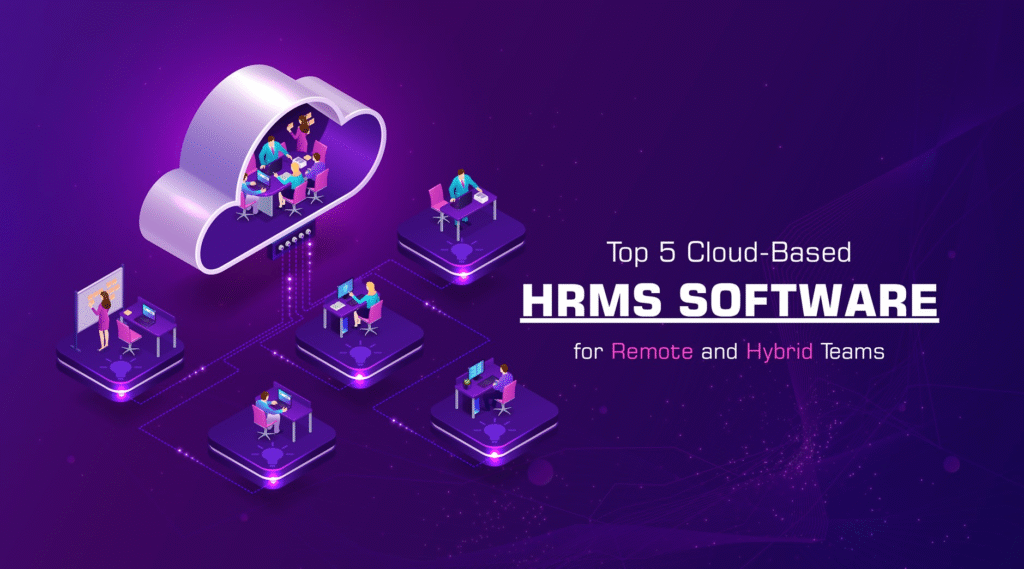
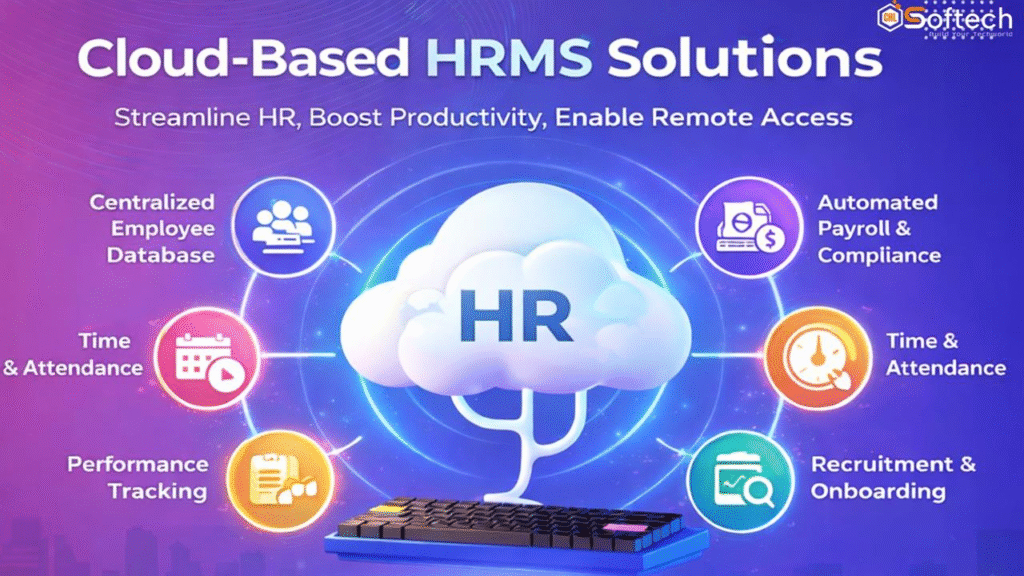
Modern HR platforms include a wide range of tools that simplify every stage of the employee lifecycle. Instead of purchasing separate software for different tasks, businesses can manage everything through one integrated system.
Employee Information Management
A centralised employee database stores personal information, contracts, employment history, emergency contacts, certifications, and important documents in one secure location. Authorised users can quickly retrieve records whenever necessary while maintaining strict access controls to protect sensitive information.
Recruitment and Applicant Tracking
Many HR platforms include an integrated recruitment system that helps businesses publish job openings, collect applications, screen resumes, schedule interviews, and communicate with candidates. Recruiters can monitor hiring progress from a single dashboard, reducing delays and improving the overall recruitment experience.
Digital Employee Onboarding
Onboarding becomes faster and more organised through automated document collection, policy acknowledgements, training assignments, and compliance verification. New employees can complete required paperwork before their first working day, allowing them to become productive more quickly.
Payroll and Benefits Administration
One of the most valuable capabilities of cloud-based HR software is payroll automation. The system calculates salaries, taxes, deductions, overtime, bonuses, and employee benefits with greater accuracy. Automated payroll reduces manual calculations while minimising costly payroll mistakes.
Time, Attendance, and Leave Management
Employees can clock in and out digitally while managers monitor attendance, overtime, shift schedules, and leave balances through real-time dashboards. Vacation requests, sick leave, and holiday approvals can be completed electronically, eliminating unnecessary paperwork and improving transparency.
Performance and Employee Development
Performance management tools allow organisations to establish measurable goals, conduct regular reviews, collect feedback, and monitor employee progress throughout the year. Continuous performance tracking encourages professional development while helping managers identify training opportunities.
Major Benefits of Cloud-Based HR Software
The growing popularity of cloud-based HR software is driven by the many advantages it offers compared to traditional HR systems.
One of the biggest benefits is remote accessibility. HR staff and employees can securely access information from virtually anywhere, making the software ideal for hybrid and remote work environments.
Another important advantage is automation. Repetitive administrative tasks such as payroll processing, leave approvals, onboarding workflows, and document management require significantly less manual effort. This improves accuracy, minimises costly mistakes, and helps teams work more efficiently.
Cloud systems also provide stronger data security. Reputable software providers use advanced encryption, automatic backups, multi-factor authentication, and continuous monitoring to protect confidential employee information from unauthorised access.
Businesses also benefit from improved regulatory compliance. HR software automatically updates payroll rules, tax calculations, and employment regulations, helping organisations remain compliant with changing labour laws and reporting requirements.
Finally, cloud solutions offer excellent scalability. As businesses expand, they can easily add new employees, departments, locations, and HR features without replacing the entire system.
Choosing the Right Cloud-Based HR Software
Selecting the right platform requires careful evaluation of business needs rather than simply choosing the most popular software.
Companies should first determine which HR functions require the most improvement. Some organisations prioritise payroll automation, while others need stronger recruitment, performance management, or global workforce capabilities.
Ease of use is equally important. Employees and HR professionals should be able to navigate the platform without extensive technical training. A user-friendly interface encourages higher adoption throughout the organisation.
Security should remain a top priority. Businesses should evaluate encryption standards, user permissions, compliance certifications, backup procedures, and data recovery capabilities before making a final decision.
Integration also plays a significant role. The software should connect smoothly with existing accounting systems, communication platforms, payroll providers, and business applications to eliminate duplicate data entry.
Finally, organisations should consider future growth. Investing in scalable software ensures the platform can continue supporting expanding operations without requiring expensive migrations later.
Common Challenges During Implementation
Although cloud HR systems offer substantial advantages, implementation requires careful planning. Migrating employee records from legacy systems can take time, especially when data exists across multiple spreadsheets or outdated databases.
Employee training is another important factor. Staff members may initially resist new technology, so providing clear guidance and ongoing support helps encourage adoption. Organisations should also establish standardised HR processes before launching the new platform to maximise efficiency and avoid confusion.
With proper planning, these temporary challenges are usually outweighed by the long-term improvements in productivity, accuracy, and employee experience.
The Future of Cloud-Based HR Software
The future of cloud-based HR software continues to evolve as artificial intelligence, predictive analytics, and automation become increasingly sophisticated. Modern platforms are beginning to recommend candidates based on skills, identify employee engagement trends, forecast workforce needs, and automate repetitive HR decisions using intelligent algorithms.
Mobile accessibility will continue expanding as employees expect to complete HR tasks directly from smartphones. Self-service capabilities will become even more advanced, allowing workers to manage benefits, training, performance goals, and career development with minimal administrative assistance.
As businesses place greater emphasis on employee experience, data-driven decision-making, and workforce flexibility, cloud HR platforms will remain a central component of successful human resource management strategies.
Conclusion
Cloud-based HR software has fundamentally changed how organisations manage their workforce by replacing manual processes with centralised, intelligent, and highly accessible digital solutions. From recruitment and onboarding to payroll, attendance, compliance, and performance management, these platforms streamline every stage of the employee lifecycle while improving accuracy and operational efficiency. Businesses that adopt modern cloud HR systems benefit from stronger security, reduced administrative workloads, better employee experiences, and greater scalability for future growth. As workplace technology continues advancing, cloud-based HR solutions will remain an essential investment for organisations seeking to build a productive, connected, and future-ready workforce.
Frequently Asked Questions
1. What is cloud-based HR software?
Cloud-based HR software is an online human resource management platform that stores employee information securely in the cloud and allows organisations to manage HR operations through internet-connected devices.
2. Is cloud-based HR software suitable for small businesses?
Yes. Many cloud HR solutions are designed specifically for small and medium-sized businesses, offering affordable pricing, simple interfaces, and scalable features that grow with the company.
3. How secure is cloud-based HR software?
Most reputable providers use advanced encryption, secure authentication, automatic backups, and continuous security monitoring to protect confidential employee data.
4. Can cloud-based HR software integrate with payroll systems?
Yes. Most modern HR platforms integrate seamlessly with payroll, accounting, attendance, communication, and other business applications to create a unified workflow.
5. What are the biggest benefits of using cloud-based HR software?
The primary benefits include automation, centralised employee data, remote accessibility, improved compliance, enhanced security, lower IT maintenance, greater efficiency, and better employee self-service capabilities.
READ MORE: clocktimes