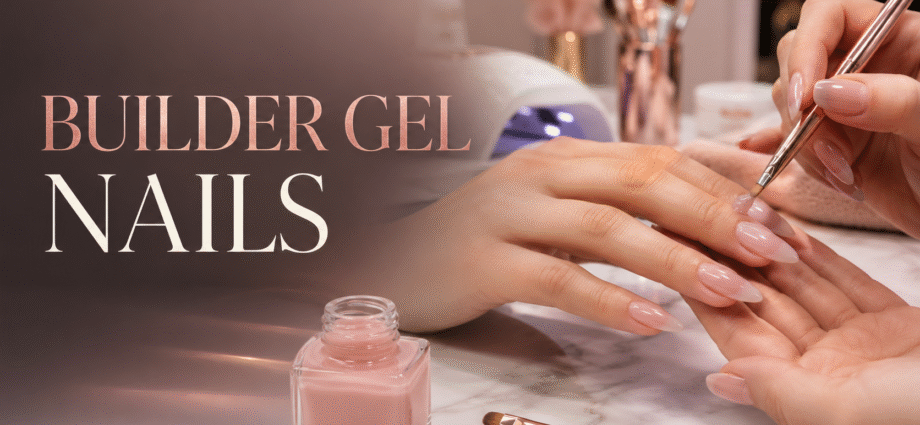
Builder gel nails have become a popular choice for people who want stronger, smoother, and longer-lasting manicures. Builder gel is thicker than ordinary gel polish and is designed to add structure to the natural nail. It can reinforce weak nails, repair small cracks, create a balanced shape, or add modest length with forms or tips. When correctly applied, the product forms a protective layer that helps natural nails resist bending and breaking. However, good preparation, controlled application, proper curing, and gentle removal are all necessary for attractive and healthy-looking results.
What Are Builder Gel Nails?
Builder gel nails are created by applying a high-viscosity gel enhancement over natural nails or nail extensions. Unlike regular gel polish, which mainly provides color, builder gel adds thickness and structural support. A nail technician can use it to create an apex, the slightly raised area around the nail’s stress point. This curve distributes pressure more evenly and helps prevent cracks. Builder gel is available in clear, pink, nude, milky, and other natural shades. It must usually be cured under a compatible LED or UV nail lamp before it becomes firm enough to shape, file, and decorate.
Builder Gel Versus Regular Gel Polish
Regular gel polish is thin and flexible, making it useful for adding glossy, chip-resistant color. It does not normally provide enough strength to correct a flat nail or support meaningful extensions. Builder gel, on the other hand, has a thicker consistency and can create a reinforced overlay. It is better suited to weak, peeling, bendy, or splitting nails. Builder gel manicures often last longer because the added structure helps protect the nail from everyday impacts. Still, builder gel should not be applied excessively thick, as a bulky manicure can look unnatural, cure unevenly, and place unnecessary weight on the nail.
Main Types of Builder Gel
One popular option is Builder in a Bottle, commonly known as BIAB. It comes in a bottle with an attached brush and generally has a medium-thick, self-levelling formula. BIAB is convenient for natural nail overlays, short extensions, and beginner-friendly applications. Potted builder gel is usually thicker and is applied with a separate brush. It gives experienced nail technicians more control when building a pronounced apex or longer extension. Some formulas are soak-off gels that soften in acetone, while others are hard gels that must be filed away. Checking the product instructions is essential because removal methods are not interchangeable.
Benefits of Builder Gel Nails
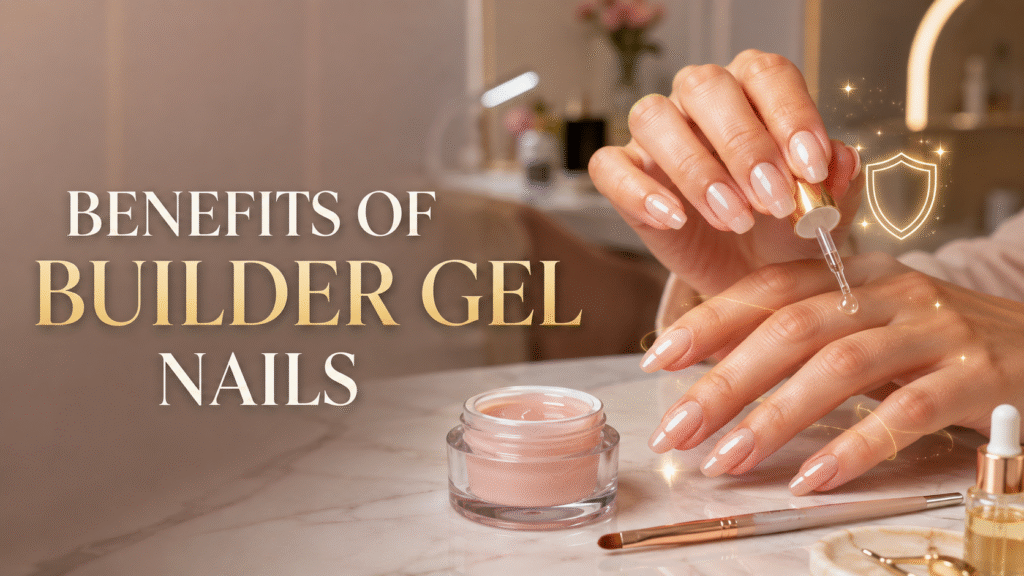
The greatest benefit of builder gel is the extra strength it provides. A correctly structured overlay helps weak natural nails withstand pressure and may allow them to grow longer without frequent breakage. Builder gel can also smooth ridges, improve uneven shapes, and repair small chips near the free edge. Its self-leveling properties can create a clean surface that looks polished even before color is added. Many people choose neutral builder shades for a simple manicure, while others use the gel as a base for nail art. Results commonly remain attractive for several weeks, depending on nail growth, preparation, lifestyle, and application quality.
Preparing Natural Nails
Proper preparation helps prevent lifting and premature separation. Begin by cleaning the hands and gently pushing back the cuticles. Remove any nonliving cuticle tissue attached to the nail plate because gel cannot bond reliably over skin. Shape the free edge, then lightly remove surface shine with a suitable fine-grit buffer without thinning the natural nail. Dust must be brushed away thoroughly. A nail cleanser or dehydrator can remove remaining oil and moisture. Some systems require a primer or separate base coat, while others do not. Following the instructions for the exact brand and lamp is safer than mixing incompatible products.
Applying Builder Gel Correctly
Application normally begins with a thin foundation layer. Some technicians cure this layer, while others leave a thin slip layer uncured so the next bead can move smoothly across the nail. A controlled bead of builder gel is placed near the stress area and gently guided toward the cuticle, sidewalls, and tip without touching the surrounding skin. The center should contain enough product to create support, while the edges remain thin and neat. Turning the hand upside down briefly may help a self-leveling gel gather toward the center. Each nail is then cured for the manufacturer’s stated time using a compatible lamp.
Building a Proper Apex
The apex is not simply a thick bump in the middle of the nail. It is a carefully placed support area that depends on nail length, shape, and stress point. Short natural nails need only a subtle apex, while longer extensions require more structure to resist leverage. The product should gradually become thinner toward the cuticle and free edge, producing a smooth transition rather than a bulky profile. If gel floods the cuticle or sidewalls, it should be removed before curing. Proper shaping can improve durability, but too much filing may weaken the structure or expose the natural nail underneath.
Curing and Finishing the Manicure
After curing, some builder gels leave a sticky inhibition layer that can be wiped with cleanser, while others are designed to remain tacky beneath color or top coat. If the surface needs correction, it may be lightly filed and buffed into shape. Gel polish, nail art, or a clear top coat can then be applied. Each layer must be cured according to the product directions. Thick or under-cured gel may feel hard on the surface while remaining insufficiently cured underneath. This can contribute to lifting and increase skin exposure to uncured ingredients. Using the recommended lamp and correct curing time is therefore important.
Maintenance and Infills
As natural nails grow, a visible gap appears near the cuticle and the apex gradually moves forward. Most builder gel manicures need maintenance every two to four weeks, depending on growth rate and condition. During an infill, lifted material is carefully removed, the grown-out area is prepared, and fresh builder gel is added to restore balance. People wearing builder gel should avoid using their nails as tools to open cans, scrape labels, or lift hard objects. Cuticle oil can keep the surrounding skin flexible, while gloves protect the manicure during cleaning, gardening, or prolonged contact with water and chemicals.
Safe Removal of Builder Gel
Builder gel should never be peeled or forced off because this can remove layers of the natural nail. Soak-off formulas are usually filed down to remove the top coat and then wrapped with acetone until the softened gel can be gently lifted away. Hard gel does not dissolve in acetone and must be carefully filed down. Many professionals leave a thin protective layer rather than filing directly onto the natural nail. Anyone uncertain about the gel type or removal technique should visit a qualified nail technician. Gentle removal preserves the nail plate and reduces the risk of soreness, thinning, or lasting surface damage.
Possible Risks and Important Precautions
Gel products must be kept away from the skin before curing. Repeated exposure to uncured gel may contribute to acrylate allergy, which can cause itching, redness, swelling, or blistering around the nails. Stop using the product and seek medical advice if these symptoms appear. Do not apply builder gel over infected, inflamed, injured, or discolored nails without professional guidance. Lamps, gels, bases, and top coats should be used as directed by their manufacturers. Good ventilation, clean tools, careful hygiene, and controlled product placement are essential. Builder gel can support nails, but it does not treat medical nail conditions.
Frequently Asked Questions
How long do builder gel nails last?
Builder gel nails commonly last between two and four weeks. Longevity depends on preparation, nail growth, product quality, application technique, and how carefully the nails are treated.
Is builder gel good for weak nails?
Yes, builder gel can reinforce weak or flexible nails by adding a protective structure. However, damaged or unhealthy nails may need rest or professional evaluation before receiving an enhancement.
Can builder gel make nails longer?
Builder gel can create short or moderate extensions when used with nail forms or tips. Very long extensions generally require a strong product, correct apex placement, and experienced application.
Is builder gel the same as acrylic?
No. Builder gel is applied as a gel and cured under a compatible lamp. Acrylic is formed by combining liquid monomer with polymer powder and hardens without lamp curing.
Can builder gel be applied at home?
It can be applied at home, but beginners must learn nail preparation, skin-safe placement, structural balance, correct lamp use, and proper removal before attempting a full manicure.
Conclusion
Builder gel nails offer a practical combination of strength, shape, and lasting beauty. They can reinforce fragile nails, support natural growth, smooth uneven surfaces, and create tasteful extensions. Successful results depend on more than choosing an attractive shade; the natural nail must be prepared gently, the apex positioned correctly, and every layer cured as directed. Regular infills and careful removal also protect the manicure and natural nails beneath it. Whether applied at home or in a salon, thoughtful technique and responsible product handling make builder gel a reliable choice for structured, polished nails.
READ MORE: clocktimes