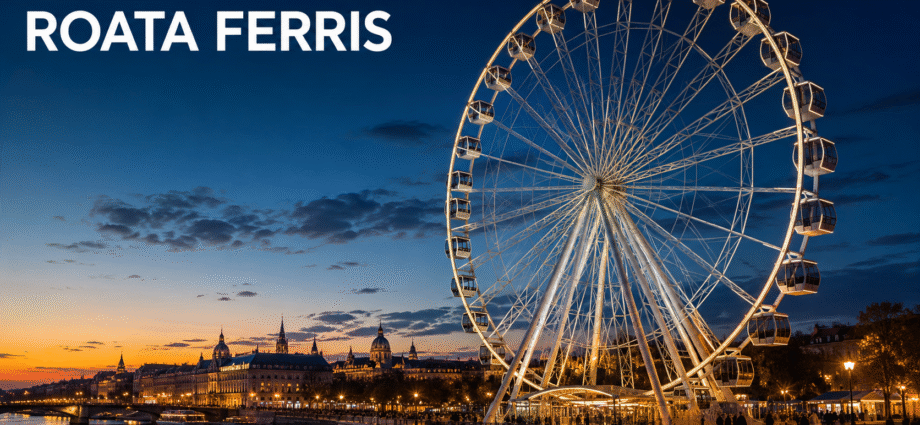
A roata Ferris is a large amusement ride built in the form of a vertical rotating wheel. Passenger cabins, seats, or enclosed gondolas are attached around its outer edge, allowing people to rise above the ground and enjoy panoramic views. In English, the attraction is generally called a Ferris wheel, while “roata Ferris” is commonly used in Romanian. It may also be described as a giant wheel or observation wheel, depending on its size and design. These attractions can be found at amusement parks, temporary fairs, festivals, resorts, and popular city destinations. Unlike roller coasters, a roata Ferris does not depend on high speed or sudden drops to entertain riders. Its main appeal comes from its height, gentle movement, impressive engineering, and the opportunity to see the surrounding landscape from a different perspective.
The Origin of the Ferris Wheel
The modern Ferris wheel takes its name from American engineer George Washington Gale Ferris Jr. He designed a giant rotating wheel for the World’s Columbian Exposition held in Chicago in 1893. The organizers wanted an extraordinary attraction that could demonstrate American engineering ability and compete with the international attention received by the Eiffel Tower. Ferris responded with a huge steel wheel that carried passengers in large cars and quickly became one of the exhibition’s main attractions. Although rotating pleasure wheels existed before his design, the scale and engineering of the Chicago wheel made the Ferris name famous. Its success encouraged amusement operators and engineers in other countries to develop their own versions. Over time, improvements in steel construction, electric motors, braking systems, and passenger cabins transformed the original concept into the modern observation wheels seen in major cities today.
How Does a Roata Ferris Work?
A roata Ferris rotates around a strong central axle supported by towers or large structural legs. Electric motors produce the power needed to turn the wheel, while gears, cables, rollers, or drive tires transfer that power to the rotating structure. The ride normally moves at a slow and carefully controlled speed so passengers can enjoy the view comfortably. Smaller wheels usually stop while people enter or leave the cabins. Some large observation wheels move so slowly that passengers can board through a controlled platform while the structure continues rotating. Operators monitor speed, cabin position, passenger distribution, weather conditions, and mechanical performance from a control station. Powerful service brakes and emergency braking systems allow the movement to be stopped when necessary. Backup power or evacuation procedures may also be available, particularly on permanent installations that carry many visitors every day.
Why Do the Cabins Remain Upright?
One of the most interesting features of a roata Ferris is the way its cabins remain upright as the wheel turns. Traditional passenger cars are attached through rotating joints, allowing gravity to keep their floors level. The attachment point moves around the wheel, but the cabin naturally hangs beneath it instead of turning upside down. Modern observation wheels may use externally mounted capsules and additional mechanical systems to control their position more precisely. These cabins are often enclosed and may include seats, ventilation, lighting, air conditioning, audio equipment, and wide windows. Engineers must calculate the weight of each gondola, the number of passengers, and the forces created during movement. Operators may distribute riders across different cabins to maintain balance. The motion may appear simple from the ground, but safely keeping every cabin stable requires careful design, high-quality materials, and regular maintenance.
Important Structural Components
A large roata Ferris contains several connected systems. The circular rim creates the wheel’s recognizable shape, while steel spokes or support cables transfer forces between the rim and the central hub. The axle carries enormous loads and must remain aligned as the structure rotates. Support towers move these forces into a specially designed foundation that keeps the installation stable. Motors, gearboxes, rollers, and braking equipment control movement, while passenger gondolas include secure doors and locking mechanisms. Modern wheels may also contain wind sensors, security cameras, communication systems, backup generators, and computer-controlled monitoring equipment. Decorative lighting is often installed across the structure, turning it into a bright city landmark after sunset. Portable wheels used at fairs are designed for repeated transportation and assembly, whereas permanent observation wheels use foundations and components intended for long-term operation.
Roata Ferris Safety Measures
The safety of a giant observation wheel depends on good engineering, professional operation, and responsible passenger behavior. Before opening the ride, trained workers inspect important areas such as cabin doors, electrical systems, brakes, structural connections, and emergency controls. Detailed inspections and maintenance are also completed at scheduled intervals. Operators must follow passenger and weight limits because overloading a gondola can affect both its mechanism and the overall balance of the wheel. Weather is another major concern. Strong winds, thunderstorms, lightning, or poor visibility may require a temporary closure, even when the structure appears safe from the ground. Passengers should remain seated or follow cabin instructions, supervise children, and never attempt to open a secured door. A slow-moving attraction still operates at a significant height, so every posted rule should be taken seriously.
Ferris Wheel Versus Observation Wheel
The expressions “Ferris wheel” and “observation wheel” are often used interchangeably, but they may describe slightly different attractions. A traditional roata Ferris is usually associated with amusement parks and traveling fairs. It may have open seats, small cabins, a simple loading system, and a relatively short ride. An observation wheel is generally larger and designed primarily for sightseeing. It often has enclosed capsules with climate control, large windows, comfortable seating, and a longer rotation time. Observation wheels are commonly built as permanent urban landmarks rather than temporary fairground rides. However, there is no strict international rule separating the two terms. Many people continue to call every vertical passenger wheel a Ferris wheel, regardless of its height, location, cabin design, or technology. Both versions use the same basic idea of carrying people around a rotating vertical structure.
Famous Ferris Wheels Around the World
Several wheels have become strongly connected with the cities in which they stand. The Wiener Riesenrad in Vienna dates from 1897 and remains one of the most recognizable historic wheels. Its traditional cabins and long history create a very different experience from newer attractions. The London Eye, located beside the River Thames, is a modern observation wheel offering wide views across central London. In Las Vegas, the High Roller rises above the surrounding entertainment district and uses spacious enclosed cabins, with a complete rotation taking roughly half an hour. Ain Dubai was constructed at a record-breaking scale of more than 250 metres, demonstrating how far observation-wheel engineering has developed. Operating schedules, ticket access, and visitor availability can change, so travellers should always confirm current information before planning a trip around a specific attraction.
Why People Enjoy the Experience
The continued popularity of the roata Ferris comes from its unusual combination of excitement and calm. Riders gradually leave the ground, watch familiar objects become smaller, and eventually reach a point with a panoramic view of the surrounding area. The movement is usually gentle enough for families, couples, photographers, and visitors who may not enjoy intense amusement rides. During the day, passengers can observe buildings, rivers, parks, mountains, or coastlines. At night, city lights and illuminated wheel structures create a completely different atmosphere. A ride can also become part of a romantic evening, family celebration, or sightseeing programme. For tourism planners, a large wheel can create a recognizable landmark and encourage visitors to explore its surrounding district. Its visual appeal makes it particularly popular in photographs, advertisements, and city skylines.
Planning a Ride
Before visiting a roata Ferris, check its opening hours, ticket rules, accessibility information, and weather policy. Some attractions offer standard shared cabins, while others may provide private gondolas, priority boarding, or special dining experiences. Visitors who are uncomfortable with heights should remember that large observation wheels move slowly and normally provide enclosed, stable cabins, but the view from the highest point can still feel intense. Clothing should match the weather, particularly when boarding an open cabin. Passengers should also confirm restrictions involving young children, mobility equipment, large bags, or medical conditions. Arriving before sunset can provide both daylight and evening views during the same visit. Planning ahead reduces waiting time and helps visitors select the experience that best matches their needs.
Conclusion
A roata Ferris is much more than a circular amusement ride. It represents over a century of engineering development, from the enormous steel wheel introduced in Chicago to today’s advanced observation attractions. Its motors, structural supports, cabins, brakes, and monitoring systems work together to provide a smooth journey at an impressive height. Historic wheels preserve the atmosphere of early amusement parks, while modern versions function as major tourism landmarks. Whether visited for the scenery, photography, family entertainment, or simple curiosity, a roata Ferris offers a memorable way to observe a destination. Following operator instructions and checking current visiting conditions can make the experience safer, easier, and more enjoyable.
Frequently Asked Questions
Who invented the first famous Ferris wheel?
George Washington Gale Ferris Jr. designed the famous wheel introduced at the Chicago World’s Columbian Exposition in 1893.
How long does one rotation take?
The duration varies by design. Small wheels may complete a rotation in several minutes, while major observation wheels can take approximately 30 minutes.
Is a roata Ferris safe?
It can be safe when professionally designed, regularly inspected, correctly operated, and used according to all passenger rules and capacity limits.
Why do Ferris wheel cabins stay upright?
Most cabins hang from rotating joints, allowing gravity to keep their floors level while the main wheel moves around its central axle.
What is the difference between a Ferris wheel and a carousel?
A Ferris wheel rotates vertically and lifts passengers high above the ground. A traditional carousel rotates horizontally, usually close to ground level.
READ MORE: clocktimes