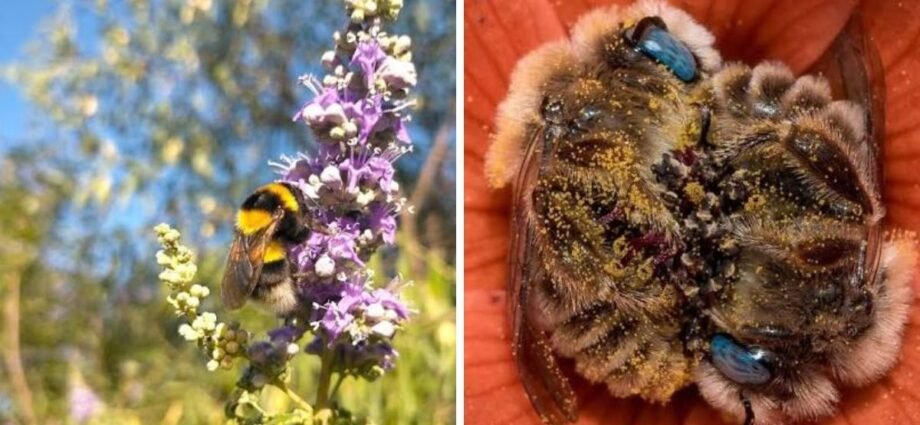
When people think about bees, they usually imagine warm spring days filled with colourful flowers, buzzing gardens, and sunny meadows. However, not every bee depends on a mild climate to survive. Polar bees, commonly known as the Arctic bumblebee (Bombus polaris), have evolved to live in one of the coldest and harshest environments on Earth. These remarkable insects thrive in regions where snow covers the ground for most of the year, temperatures often remain below freezing, and the growing season lasts only a few weeks. Despite these extreme conditions, polar bees continue to pollinate Arctic plants and support one of the world’s most fragile ecosystems. Their ability to survive where very few insects can makes them one of nature’s most fascinating pollinators.
What Are Polar Bees?
Polar bees are a group of cold-adapted bumblebees that inhabit areas above the Arctic Circle. The best-known species is Bombus polaris, which is found across northern Alaska, Canada, Greenland, Scandinavia, and parts of northern Russia. Unlike honeybees that live in large colonies and produce honey for long-term storage, Arctic bumblebees form relatively small seasonal colonies focused on reproduction during the brief Arctic summer.
Their environment presents challenges unlike those faced by bees living in temperate regions. Long winters, frozen landscapes, powerful winds, and limited flowering plants require these insects to be highly specialised. Each stage of their life cycle is specially adapted to help them survive and reproduce during the Arctic’s brief period of mild weather. Because of these adaptations, polar bees play a crucial role in maintaining biodiversity across Arctic ecosystems.
Where Do Polar Bees Live?
The habitat of polar bees includes tundra landscapes where trees are nearly absent, but hardy wildflowers bloom during the short summer. These areas receive continuous daylight for several weeks, creating a brief yet productive growing season. During this time, Arctic plants depend heavily on insect pollination to produce seeds before winter returns.
Polar bees are commonly found visiting flowers such as Arctic poppies, dwarf willows, mountain avens, and saxifrages. Since flowering plants are scattered across the tundra, these bees often travel considerable distances in search of nectar and pollen. Their thick bodies and powerful wings allow them to fly even when temperatures remain much lower than those tolerated by most other bee species.
Incredible Adaptations That Help Polar Bees Survive
One of the most impressive features of polar bees is their collection of survival adaptations. These characteristics allow them to remain active in temperatures that would prevent many insects from flying.
Their bodies are covered in a thick layer of insulating fur that helps retain heat by trapping pockets of warm air close to the skin. This natural insulation helps reduce heat loss while flying through cold Arctic winds. They also possess strong flight muscles capable of producing heat by rapidly vibrating before takeoff. This process, known as shivering thermogenesis, raises their body temperature enough to allow flight.
Another remarkable adaptation involves their relationship with Arctic flowers. Many flowers naturally collect sunlight and create slightly warmer microenvironments. Polar bees often remain inside these blossoms to absorb additional warmth before continuing to forage. Their dark body colouration also absorbs more solar energy, helping them maintain suitable body temperatures during cool days.
The Life Cycle of Polar Bees
Polar bees have an extremely brief life cycle because the Arctic’s short summer leaves only a limited time for nesting, growth, and reproduction. During winter, fertilised queens remain dormant beneath the ground, surviving nearly nine months in hibernation. Thick layers of snow help insulate them from the coldest temperatures.
When spring finally arrives, usually in late May or early June, the queens emerge and immediately begin searching for suitable nesting sites. They often select abandoned rodent burrows or naturally protected underground spaces that provide insulation against changing weather.
After establishing a nest, the queen lays her first eggs and personally cares for the developing larvae until the first generation of workers emerges. These workers quickly assume responsibilities such as collecting nectar, gathering pollen, expanding the nest, and caring for additional larvae. As summer progresses, the colony produces new queens and males that mate before winter approaches. The old colony eventually dies, leaving only the newly fertilised queens to survive until the following spring.
Why Polar Bees Are Important to Arctic Ecosystems
Although they may seem insignificant because of their small size, polar bees perform an essential ecological function. They are among the most effective pollinators in Arctic environments, ensuring that flowering plants successfully reproduce each year.
Many tundra plants rely almost entirely on insect pollination to produce seeds. Without polar bees, the diversity of Arctic vegetation could decline significantly. This reduction would affect herbivores such as musk oxen, Arctic hares, caribou, and other wildlife that depend directly or indirectly on these plants for food and shelter.
Healthy plant populations also help stabilise fragile Arctic soils, reduce erosion, and support countless microorganisms. In this way, polar bees contribute to maintaining the balance of an entire ecosystem despite their relatively small population sizes.
Natural Enemies and Parasitic Threats
Life in the Arctic is challenging, and polar bees face several natural threats beyond freezing temperatures. Birds, spiders, and insect-eating mammals occasionally prey on adult bees or their nests. However, one of the most unusual dangers comes from another bumblebee species called Bombus hyperboreus.
Unlike ordinary bumblebees, this species practices social parasitism. Instead of building its own colony and raising workers, the parasitic queen invades a polar bee nest. She overpowers or kills the resident queen and takes control of the colony. The existing workers continue caring for the nest but unknowingly raise the parasite’s offspring instead of their own colony’s future queens. This fascinating relationship demonstrates the complexity of Arctic evolution and survival strategies.
How Climate Change Is Affecting Polar Bees
Climate change is becoming one of the greatest challenges facing polar bees. Rising Arctic temperatures are altering flowering seasons, melting permafrost, and changing the distribution of many plant species. Since polar bees depend on precise timing between flower blooming and colony development, even small seasonal shifts can create problems.
Warmer conditions may also allow southern bee species to expand northward, increasing competition for food resources. New predators, parasites, and diseases may accompany these expanding populations, placing additional pressure on Arctic bumblebees that evolved under relatively isolated conditions.
Scientists continue monitoring these changes to understand how Arctic pollinators will respond in the coming decades. Protecting these insects is important because their decline could trigger broader ecological consequences throughout the tundra.
Interesting Facts About Polar Bees
Several fascinating characteristics make polar bees unique among the world’s pollinators. They can fly at temperatures much lower than most bee species thanks to their ability to generate internal heat. Their colonies are considerably smaller than those of honeybees, reflecting the limited food resources available in Arctic environments. Instead of storing large quantities of honey for winter survival, only the fertilised queens survive the cold season while the remainder of the colony naturally dies each autumn. Their thick fur not only provides insulation but also helps collect pollen more efficiently as they move from flower to flower. Despite living in one of Earth’s harshest climates, these bees remain highly effective pollinators and demonstrate extraordinary resilience.
Conclusion
Polar bees are among the most remarkable insects found in nature. Their ability to survive freezing temperatures, complete an entire life cycle during the short Arctic summer, and pollinate fragile tundra plants highlights the incredible adaptability of wildlife. From their insulating fur and heat-producing muscles to their carefully timed reproduction, every aspect of their biology has evolved for life in the Far North. As climate change continues to reshape Arctic ecosystems, understanding and protecting these extraordinary pollinators becomes increasingly important. Their survival supports not only flowering plants but also the countless species that depend on healthy Arctic habitats.
Frequently Asked Questions (FAQs)
1. What are polar bees?
Polar bees are Arctic bumblebees, primarily Bombus polaris, that live in cold regions above the Arctic Circle and pollinate tundra flowers during the short summer season.
2. Where are polar bees found?
They are found across northern Alaska, Canada, Greenland, Scandinavia, and parts of northern Russia, where Arctic tundra vegetation provides nectar and pollen.
3. How do polar bees survive freezing temperatures?
They survive using thick insulating fur, heat generated by vibrating their flight muscles, underground nests, and by taking advantage of sunlight collected by Arctic flowers.
4. Do polar bees produce honey?
No. Unlike honeybees, polar bees do not store large amounts of honey. Their seasonal colonies die before winter, and only fertilised queens survive through hibernation.
5. Why are polar bees important?
Polar bees are essential pollinators that help Arctic plants reproduce. Their pollination supports biodiversity and contributes to the stability of the fragile tundra ecosystem.
READ MORE: clocktimes