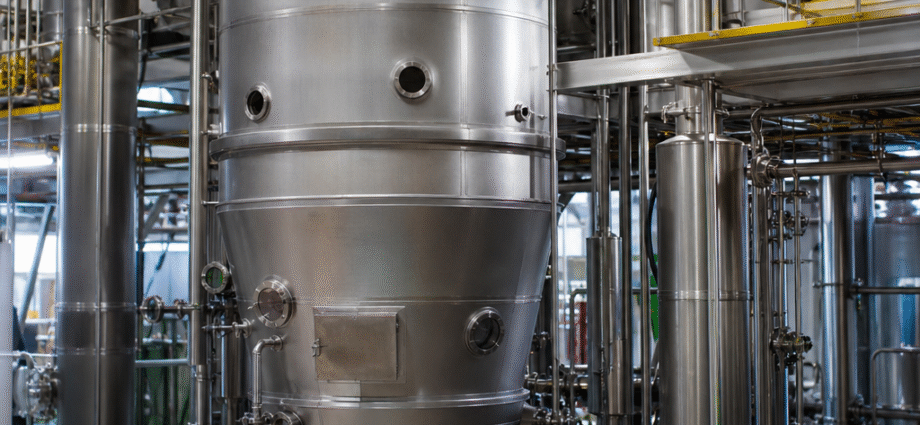
Across chemical manufacturing, pharmaceutical production, and energy processing, the demand for reliable, high-throughput reaction systems has never been greater. Among the most versatile and widely adopted technologies in this space is the fluid bed reactor — a system that has proven its value across decades of industrial application. As industries push toward greater efficiency, cleaner outputs, and more controllable processes, understanding the mechanics and strategic advantages of fluid bed technology becomes essential for engineers, procurement specialists, and plant operators alike.
What Makes Fluid Bed Technology Distinct?
At its core, a fluid bed reactor operates by passing a gas or liquid upward through a bed of solid particles at a velocity sufficient to suspend those particles in a fluid-like state. This fluidization creates an environment of exceptional contact between the reactant gas and the solid catalyst or material, enabling highly uniform temperature distribution and superior mass transfer rates. Unlike fixed-bed systems, where temperature gradients and channeling can compromise reaction consistency, fluid bed reactors maintain near-isothermal conditions throughout the reaction zone.
This characteristic makes them particularly valuable in exothermic reactions, where heat management is critical. The continuous mixing of particles prevents localized hot spots that could degrade catalysts, damage products, or create safety hazards. The result is a more predictable, controllable, and scalable reaction environment — qualities that are indispensable in large-scale industrial operations.
Key Industrial Applications Driving Adoption
Catalytic Cracking and Petrochemical Processing
One of the most established applications of fluid bed technology is in catalytic cracking within the petroleum refining industry. Fluid catalytic cracking (FCC) units rely on the fluidized state to continuously circulate catalyst between the reactor and regenerator, enabling uninterrupted processing of heavy hydrocarbon feedstocks into lighter, more valuable fractions such as gasoline and diesel. The ability to regenerate catalyst in real time without shutting down the unit is a significant operational advantage that fixed-bed systems simply cannot replicate at comparable scale.
Pharmaceutical and Fine Chemical Manufacturing
In pharmaceutical manufacturing, fluid bed reactors are used for granulation, coating, and drying of active pharmaceutical ingredients (APIs). The gentle, uniform treatment of particles in a fluidized state preserves the integrity of sensitive compounds while ensuring consistent particle size distribution — a critical quality parameter in drug formulation. As regulatory standards tighten and batch-to-batch consistency becomes a non-negotiable requirement, the precision offered by fluid bed systems positions them as a preferred choice for GMP-compliant facilities.
Biomass Gasification and Renewable Energy
The energy sector has increasingly turned to fluid bed reactors for biomass gasification and combustion applications. Their ability to handle heterogeneous feedstocks — including agricultural residues, wood chips, and municipal solid waste — without requiring uniform particle size makes them exceptionally adaptable. The fluidized environment promotes complete combustion and efficient syngas production, supporting the transition toward cleaner energy generation at industrial scale.
Engineering Considerations for Fluid Bed Reactor Design
Designing an effective fluid bed reactor requires careful attention to several interdependent variables. Gas velocity must be precisely calibrated relative to the minimum fluidization velocity of the solid particles — too low and the bed remains static; too high and particles are entrained and carried out of the reactor. Particle size distribution, density, and surface characteristics all influence fluidization behavior and must be matched to the intended process conditions.
Reactor geometry also plays a significant role. Cylindrical vessels with carefully designed distributor plates ensure even gas distribution across the bed cross-section, preventing dead zones and promoting uniform reaction conditions. Cyclone separators or bag filters are typically integrated downstream to recover entrained particles and return them to the bed, maintaining catalyst inventory and minimizing material losses.
Ancillary systems are equally important to overall plant performance. For instance, the integrity of connecting pipework and flexible components directly affects system reliability. Engineers often specify flexible tubing and expansion joints to accommodate thermal expansion and vibration within the process circuit, reducing mechanical stress on reactor connections and extending the operational lifespan of the installation.
The Shift Toward Single-Use and Modular Reactor Systems
The broader reactor technology landscape is evolving rapidly. In biopharmaceutical manufacturing, for example, single-use reactor platforms are gaining significant traction. Industry observers have noted that leading suppliers are investing heavily in this space — as highlighted in recent coverage of MilliporeSigma’s expansion of ADC production capacity through single-use reactor technology. While single-use systems address specific needs in biologics manufacturing, the fundamental principles of reaction engineering — mass transfer, temperature control, and residence time management — remain consistent across reactor types.
For heavy industrial applications, however, the robustness and throughput capacity of traditional fluid bed systems remain unmatched. The capital investment in a well-engineered fluid bed reactor is justified by its longevity, operational flexibility, and the breadth of processes it can accommodate across its service life.
International Process Plants: A Trusted Source for Process Equipment
For facilities seeking to acquire proven process equipment without the lead times and costs associated with new builds, the secondary market offers compelling opportunities. International Process Plants is a globally recognized supplier of used and refurbished process equipment, offering an extensive inventory that spans reactors, separators, heat exchangers, and complete plant systems. Their offering of a fluid bed reactor inventory provides procurement teams with access to thoroughly inspected, documented equipment that can be integrated into existing operations or used to establish new processing lines at a fraction of the cost of new capital equipment.
Working with a reputable equipment supplier of this caliber allows plant operators to evaluate specific units, review maintenance histories, and make informed purchasing decisions backed by technical expertise. This approach is particularly valuable for projects with compressed timelines or constrained capital budgets, where the ability to source quality equipment quickly can be the difference between a project proceeding and stalling.
Maintenance, Longevity, and Operational Best Practices
Maximizing the service life of a fluid bed reactor requires a disciplined approach to maintenance and monitoring. Distributor plate inspection should be conducted at regular intervals to identify erosion or blockage that could disrupt gas distribution. Refractory linings, where present, must be checked for cracking or spalling that could compromise thermal performance or structural integrity. Catalyst management — including activity monitoring, top-up schedules, and periodic full replacement — is critical to sustaining reaction efficiency over time.
Instrumentation plays an equally important role. Differential pressure measurements across the bed provide real-time insight into fluidization quality, while temperature profiling helps detect any emerging non-uniformities before they escalate into operational problems. Modern control systems can integrate these data streams to enable predictive maintenance strategies, reducing unplanned downtime and extending campaign lengths.
Conclusion: A Technology Built for Industrial Demands
The fluid bed reactor remains one of the most capable and adaptable technologies available to process industries. Its ability to deliver uniform reaction conditions, handle diverse feedstocks, and scale effectively from pilot to full production makes it a cornerstone of modern chemical and industrial processing. Whether sourced new or through the secondary equipment market, a well-specified and properly maintained fluid bed reactor represents a sound long-term investment in process capability. As industries continue to evolve and efficiency demands intensify, this technology will remain central to the engineering toolkit of forward-thinking plant operators worldwide.
READ MORE: clocktimes