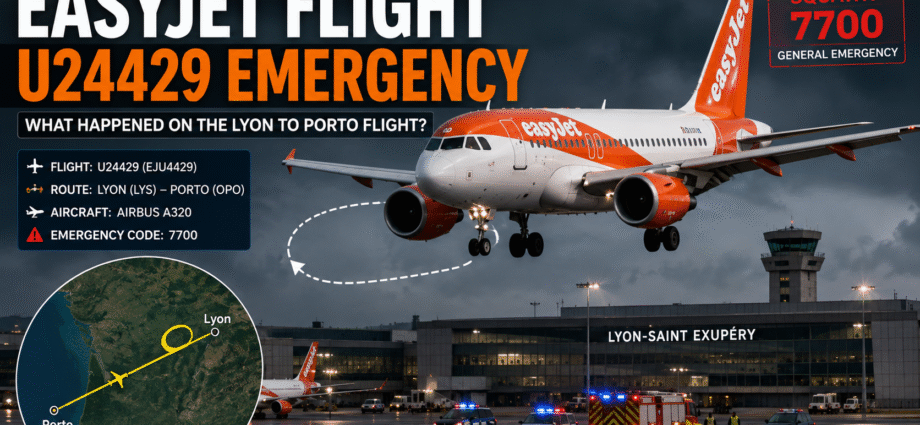
The easyJet flight U24429 emergency became an unusual aviation incident after an Airbus A320 traveling from Lyon, France, to Porto, Portugal, was forced to turn around shortly after departure. The flight, also identified as EJU4429, encountered the emergency after a passenger reportedly attempted to gain access to the cockpit.
The situation required immediate action from the cabin crew, passengers, pilots, and authorities on the ground. The aircraft subsequently returned safely to Lyon-Saint Exupéry Airport, where police took the disruptive passenger into custody. Although the incident caused a significant disruption to the planned journey, there were no reported injuries among the other passengers or crew. The event highlights the importance of strict cockpit security procedures and the ability of aviation crews to respond quickly when an unexpected situation develops during flight.
What Was easyJet Flight U24429?
easyJet flight U24429, also known as EJU4429, was operating a scheduled passenger service between Lyon-Saint Exupéry Airport and Porto Airport. The aircraft involved was an Airbus A320, one of the most widely used aircraft types for short and medium-haul European routes.
The flight was expected to travel from France to Portugal, but its journey was interrupted shortly after takeoff because of a serious passenger-related security incident. Instead of continuing toward Porto, the pilots made the decision to return to Lyon. During the emergency, the aircraft used squawk 7700, the internationally recognized transponder code for a general emergency. This alerts air traffic controllers that an aircraft requires immediate attention and allows appropriate emergency procedures to be coordinated.
What Caused the easyJet Flight U24429 Emergency?
The main reason for the emergency was a passenger reportedly attempting to breach the cockpit. According to reports, the 26-year-old passenger appeared to be experiencing a state of confusion or delirium and became disruptive during the flight. He reportedly tried to force his way toward the flight deck, creating a potentially serious security threat.
Access to an aircraft cockpit is highly restricted because unauthorized entry can put everyone aboard the aircraft at risk. The cabin crew and other passengers responded quickly and managed to restrain the individual before he could enter the cockpit. Because the situation involved an attempted breach of the flight deck, the pilots treated the event as an emergency and decided that returning to the departure airport was the safest course of action.
How Did the Pilots Respond?
The flight crew responded by declaring a general emergency and coordinating with air traffic control while turning the aircraft back toward Lyon. The decision to return to the departure airport allowed the crew to deal with the security situation in an environment where police and medical personnel could be prepared to respond immediately.
The aircraft completed the return flight safely and landed at Lyon less than 20 minutes after its departure. Turning around rather than continuing to Porto also reduced the amount of time the crew would have to manage a potentially unstable situation in the air. The incident demonstrated how pilots must make rapid decisions when passenger behavior creates a threat to aircraft security, while simultaneously maintaining control of the aircraft and communicating with authorities.
What Happened After the Aircraft Landed?
Once the aircraft returned to Lyon-Saint Exupéry Airport, French police were reportedly waiting on the ground. Officers took the disruptive passenger into custody after the aircraft landed. The passenger was also reported to have undergone a medical examination before being admitted to a hospital in France. This response was important because the reported behavior appeared to involve a possible medical or psychological issue rather than simply a routine passenger disagreement. Authorities therefore had to address both the security implications of the incident and the individual’s condition. Meanwhile, the other passengers were kept safe and the situation was brought under control without reports of injuries to passengers or crew.
Did Passengers Continue Their Journey to Porto?
Yes. After the disruptive passenger was removed and the situation had been dealt with, the remaining passengers were able to continue their journey to Porto. Although the emergency caused a delay and disrupted the original flight schedule, the passengers were ultimately able to complete their trip. Incidents involving disruptive passengers can create complicated operational challenges for airlines because aircraft may need to return to an airport, emergency services may need to respond, and additional checks may be required before the journey can continue. In this case, the return to Lyon allowed the airline and authorities to resolve the immediate problem before the remaining passengers continued toward their destination.
Why Is Cockpit Security So Important?
The flight deck is one of the most protected areas of a commercial aircraft. Cockpit access is tightly controlled because unauthorized entry could interfere with pilots and potentially threaten the safety of everyone onboard. Modern passenger aircraft operate under strict security procedures designed to prevent unauthorized individuals from entering the cockpit while the aircraft is in operation. Cabin crew are trained to recognize and respond to unusual or threatening passenger behavior, while pilots have procedures for dealing with security emergencies. The easyJet incident illustrates why these measures are essential. Even when an individual does not necessarily intend to cause harm, an attempt to enter the cockpit can quickly become a serious aviation security concern.
What Does Squawk 7700 Mean?
During the easyJet flight U24429 emergency, the aircraft reportedly transmitted the transponder code 7700. In aviation, squawk 7700 is commonly used to indicate a general emergency. It informs air traffic controllers that the aircraft is experiencing a situation requiring immediate attention. The code does not identify the exact cause of an emergency. Instead, it serves as a broad alert that allows controllers and airport authorities to prioritize the aircraft and prepare for its arrival. In this case, the emergency declaration and return to Lyon helped ensure that appropriate personnel were ready when the Airbus A320 landed.
Was Anyone Injured?
Reports indicated that there were no injuries among the other passengers or crew members following the incident. The disruptive passenger was restrained, taken into custody after landing, and reportedly received medical attention. The successful intervention by the crew and passengers helped prevent the situation from escalating further. The pilots were also able to return the aircraft safely to Lyon, demonstrating the importance of coordinated action during unexpected onboard incidents. While the event was undoubtedly stressful for those traveling, the overall outcome was controlled and did not result in reported physical injuries or aircraft damage.
What Can Passengers Learn From the Incident?
The incident demonstrates why passengers should follow crew instructions whenever an emergency or disruptive situation occurs onboard. Cabin crew members are trained to manage unusual behavior and protect passengers, while pilots are responsible for making decisions that maintain the safety of the aircraft. Passengers should avoid physically confronting disruptive individuals unless directed or necessary to assist crew members and should report concerning behavior as soon as possible. The easyJet flight U24429 emergency also shows that an aircraft can safely return to its departure airport when a serious situation develops shortly after takeoff. Aviation safety depends heavily on preparation, communication, and cooperation between crew, passengers, air traffic controllers, airport personnel, and emergency services.
FAQs About easyJet Flight U24429 Emergency
1. What happened on easyJet flight U24429?
A passenger reportedly attempted to force his way into the cockpit shortly after the aircraft departed Lyon for Porto. Crew members and passengers intervened, and the pilots returned the aircraft to Lyon.
2. What aircraft operated flight U24429?
The flight was operated by an Airbus A320, a common aircraft used by easyJet for European passenger services.
3. Why did the aircraft return to Lyon?
The aircraft returned to Lyon because of the passenger-related security incident. The pilots declared an emergency and chose to land at the departure airport.
4. What does squawk 7700 mean?
Squawk 7700 is an internationally recognized transponder code used to alert air traffic controllers that an aircraft is experiencing a general emergency.
5. Were passengers able to reach Porto?
Yes. After the disruptive passenger was removed and the situation was resolved, the remaining passengers were able to continue their journey to Porto.
Conclusion
The easyJet flight U24429 emergency was triggered by a serious passenger-related security incident shortly after the aircraft departed Lyon for Porto. A passenger reportedly attempted to access the cockpit, prompting the crew to intervene and the pilots to declare an emergency.
The Airbus A320 safely returned to Lyon, where police took the passenger into custody and medical personnel reportedly assessed him. Despite the disruption, no injuries were reported among the other passengers or crew, and the remaining travelers were eventually able to continue to Porto. The incident serves as a reminder of the importance of cockpit security, trained cabin crews, rapid pilot decision-making, and coordinated emergency procedures in maintaining safety during commercial air travel.
READ MORE: clocktimes