
Modern software development demands speed, reliability, and continuous improvement. Organisations can no longer rely on slow manual processes to build, test, deploy, and maintain applications because customer expectations continue to rise while technology evolves at a rapid pace. This is where DevOps Automation becomes an essential part of modern software engineering. It combines automation tools, standardised workflows, and collaborative development practices to reduce repetitive manual work throughout the software lifecycle. Instead of depending on manual server configuration, lengthy testing procedures, or complex deployment processes, teams use automation to complete these tasks consistently and efficiently. As a result, software reaches users faster, system reliability improves, and developers spend more time creating valuable features instead of handling repetitive operational tasks. Businesses of every size now consider automation a core strategy for achieving faster releases, stronger security, and better customer satisfaction.
What Is DevOps Automation?
DevOps Automation refers to the use of software tools and automated workflows to perform development and operational tasks with minimal human intervention. It replaces manual activities such as code integration, infrastructure provisioning, software testing, application deployment, monitoring, and system configuration with automated processes.
The primary goal is to create a predictable and repeatable software delivery pipeline that reduces errors and accelerates development cycles. Every change made by developers can automatically trigger testing, security validation, deployment, and monitoring, ensuring software quality remains consistent throughout the entire lifecycle. By automating repetitive tasks, organisations improve collaboration between development and operations teams while reducing downtime and operational costs.
Why DevOps Automation Matters
Software development has become increasingly complex due to cloud computing, microservices, distributed systems, and frequent application updates. Manual management of these environments often leads to inconsistent deployments, configuration mistakes, delayed releases, and unnecessary downtime.
DevOps Automation addresses these challenges by creating standardised workflows that execute tasks consistently every time. Teams gain faster feedback after code changes, infrastructure becomes easier to manage, deployments become more reliable, and security checks occur earlier during development. These improvements not only increase productivity but also help organisations respond quickly to changing market demands without sacrificing quality.
Continuous Integration and Continuous Deployment (CI/CD)
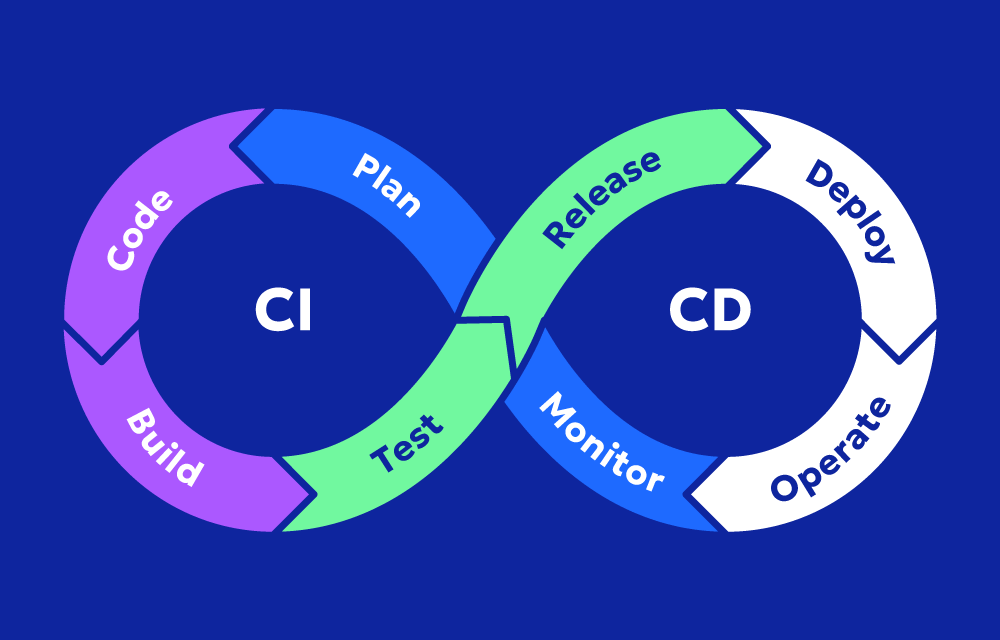
One of the most important foundations of DevOps Automation is Continuous Integration and Continuous Deployment (CI/CD). This automated pipeline transforms source code into production-ready software through a series of carefully managed steps.
Continuous Integration enables developers to regularly merge code updates into a central shared repository for faster validation. Every code submission automatically starts a build process, executes unit tests, and verifies code quality. Issues are identified as soon as they appear, preventing them from growing into larger problems over time.
Continuous Deployment extends this process by automatically packaging validated applications and releasing them into production once all tests pass successfully. If deployment issues occur, automated rollback mechanisms quickly restore the previous stable version, minimising service disruption. This efficient workflow helps organisations deliver new features more quickly while ensuring applications remain stable and dependable.
Infrastructure as Code (IaC)
Traditional infrastructure management required administrators to manually configure servers, networking components, databases, and cloud resources. This approach was slow, inconsistent, and difficult to replicate across environments.
Infrastructure as Code (IaC) changes this process by defining infrastructure through configuration files instead of manual actions. These files describe exactly how cloud resources should be created and managed.
Using IaC, organisations can automatically provision servers, storage, databases, virtual networks, and security configurations with consistent results. Development, testing, and production environments remain synchronised, reducing deployment problems caused by configuration differences. Infrastructure changes also become version-controlled, making it easier to track updates and recover from mistakes.
Automated Testing Improves Software Quality
Testing is one of the most valuable components of DevOps Automation because it ensures applications remain reliable before reaching users. Automated testing executes predefined validation procedures every time developers submit new code.
Unit testing confirms that each software component performs its intended function accurately. Integration testing confirms different services communicate properly and perform expected operations together. Automated security scanning identifies known vulnerabilities in software dependencies, configuration files, and application code before deployment.
Performance testing can also evaluate how applications behave under heavy workloads. By detecting problems early, automated testing significantly reduces production failures while improving overall software quality.
Popular DevOps Automation Tools
A successful automation strategy relies on selecting tools that match organisational requirements and existing workflows. Different tools specialise in various stages of the software delivery process.
GitHub Actions, Jenkins, and GitLab CI/CD automate software builds, testing, and deployment pipelines. Terraform, AWS CloudFormation, and Pulumi simplify infrastructure provisioning across cloud platforms using configuration files. Docker packages applications into portable containers, while Kubernetes manages container deployment, scaling, and recovery automatically. Configuration management platforms such as Ansible, Chef, and Puppet maintain consistent server configurations across large infrastructures. Monitoring solutions including Prometheus, Grafana, and Datadog provide continuous visibility into application performance, system health, and operational metrics.
Key Benefits of DevOps Automation
Organisations implementing DevOps Automation experience improvements across multiple areas of software development and IT operations. Automated workflows reduce repetitive manual work, allowing engineers to focus on innovation rather than maintenance tasks.
Deployment frequency increases because automated pipelines eliminate delays associated with manual approvals and configuration steps. Standardised deployments minimise human errors, improving application reliability. Infrastructure becomes easier to reproduce across development, testing, and production environments. Automated security scanning strengthens application protection by identifying vulnerabilities before deployment. Faster feedback cycles allow developers to resolve issues quickly, resulting in shorter release cycles and improved customer satisfaction.
Additionally, automation reduces operational costs by minimising manual intervention while increasing resource utilisation through efficient infrastructure management.
Best Practices for Successful DevOps Automation
Implementing automation effectively requires careful planning rather than simply introducing new tools. Organisations should begin by storing everything as code, including application source files, infrastructure configurations, deployment pipelines, and environment settings within version control systems.
Security should become an integrated component of every automated workflow through DevSecOps practices. Vulnerability scanning, dependency analysis, and secrets management should occur automatically during development instead of waiting until production.
Continuous monitoring provides valuable operational insights by detecting failures, performance bottlenecks, and unusual system behaviour in real time. Automated alerts combined with corrective actions can restart failed services before users notice disruptions.
Teams should also adopt small, incremental code commits instead of large updates. Smaller changes simplify testing, accelerate troubleshooting, and reduce deployment risks throughout the pipeline.
Common Challenges in DevOps Automation
Although automation offers significant advantages, organisations often encounter several implementation challenges. Legacy systems may lack compatibility with modern automation tools, requiring gradual migration strategies. Teams accustomed to manual processes may initially resist organisational change, making proper training and communication essential.
Building reliable automation pipelines requires careful planning because poorly designed workflows can introduce new bottlenecks instead of eliminating them. Security configurations must also remain current as infrastructure evolves continuously. Monitoring complex cloud-native environments demands specialised expertise to interpret performance data and respond effectively to operational incidents.
Despite these challenges, organisations that invest in planning, documentation, and continuous improvement typically achieve long-term success.
The Future of DevOps Automation
The future of DevOps Automation continues to evolve alongside advancements in artificial intelligence, cloud computing, and platform engineering. Intelligent automation is beginning to assist with code analysis, infrastructure optimisation, anomaly detection, predictive maintenance, and automated incident response. Organisations are increasingly integrating AI-powered monitoring systems capable of identifying performance issues before they affect users.
As software ecosystems become more distributed and cloud-native, automation will remain a fundamental requirement rather than an optional improvement. Businesses that continuously modernise their automation strategies will remain more competitive, agile, and capable of delivering reliable digital experiences.
Conclusion
DevOps Automation has revolutionised the process of developing, testing, deploying, and maintaining modern software applications. By automating repetitive operational tasks, organisations improve development speed, software quality, infrastructure consistency, and system reliability. Technologies such as CI/CD, Infrastructure as Code, automated testing, container orchestration, and continuous monitoring create efficient workflows that reduce manual errors while accelerating software delivery. Although implementation requires planning, collaboration, and ongoing refinement, the long-term benefits far outweigh the initial investment. As technology continues to advance, DevOps Automation will remain one of the most important strategies for building scalable, secure, and high-performing software systems.
Frequently Asked Questions
1. What is DevOps Automation?
DevOps Automation is the practice of using software tools and automated workflows to manage software development, testing, deployment, infrastructure, and monitoring with minimal manual intervention.
2. Why is DevOps Automation important?
It improves deployment speed, reduces human errors, enhances software quality, increases operational efficiency, and enables faster delivery of new features.
3. What is the role of CI/CD in DevOps Automation?
CI/CD automates code integration, testing, building, deployment, and rollback processes, allowing organisations to release software quickly and reliably.
4. How does Infrastructure as Code support DevOps Automation?
Infrastructure as Code automates server and cloud resource provisioning through configuration files, ensuring consistent environments across development, testing, and production.
5. What are the biggest benefits of DevOps Automation?
Major benefits include faster software releases, improved reliability, reduced operational costs, stronger security, consistent infrastructure, and better collaboration between development and operations teams.
READ MORE: clocktimes