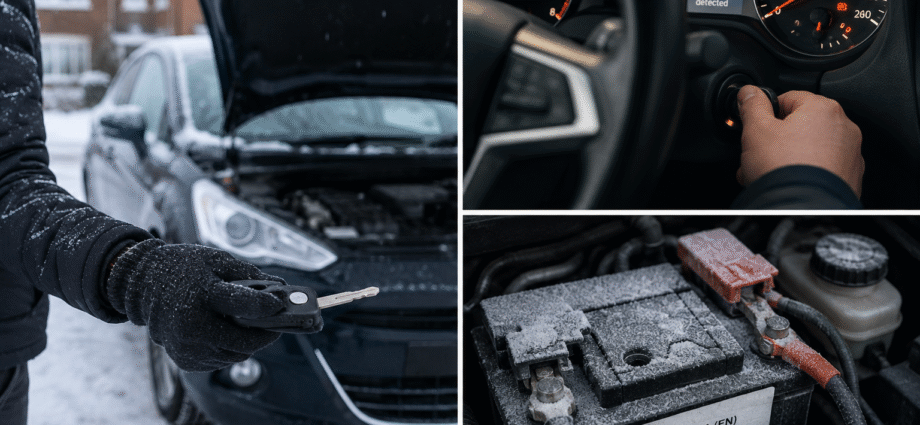
If your car starts normally in mild weather but struggles or refuses to start on a cold morning, the temperature can expose a weakness that was already developing. Cold weather puts extra demand on the battery and starter motor, while thicker engine oil increases the resistance the engine has to overcome. Diesel vehicles can also be affected by glow plug problems, while damp conditions can expose faults in ignition components.
A slow crank, rapid clicking, normal cranking without the engine firing, or a warning light can each point towards a different cause. Knowing what you hear and see when the car refuses to start can help narrow down the problem before you arrange professional assistance.
This guide explains the most common causes of cold-weather starting problems, what to do when your car will not start, how to prepare your vehicle before winter and when a professional inspection is needed.
If the cause is not obvious from the symptoms, a professional diagnostic check can help identify faults in the battery, charging system, starter motor, ignition or other components involved in starting the engine. This can be especially useful when the car cranks normally but fails to fire, as several different faults can produce similar symptoms.
Why Cold Weather Makes Starting So Much Harder
Starting an engine requires three things to happen simultaneously: enough electrical power to crank the engine, an adequate fuel supply delivered at the correct pressure, and a spark or sufficient heat to ignite the fuel and air mixture. Cold weather attacks all three at once.
The battery produces power through a chemical reaction inside its cells. Cold temperatures slow that reaction significantly. A battery delivering its full rated capacity at 20 degrees Celsius may deliver as little as half that capacity at zero degrees, precisely when the engine demands more power to crank through cold, thickened oil. Fuel delivery and ignition systems face their own cold-specific challenges at the same moment.
| What Cold Weather Affects | What Happens | Why It Matters |
| Battery capacity | Chemical reaction slows, output drops by up to 50% at 0°C | Less power available exactly when more is needed |
| Engine oil viscosity | Oil thickens and flows more slowly | More resistance for the starter motor to overcome |
| Fuel system | Moisture in lines can freeze, diesel can gel | Fuel may not reach the engine reliably |
| Glow plugs (diesel) | Combustion chambers harder to preheat | Extended crank time or failure to start |
| Ignition components | Moisture accumulates on leads and coils | Spark leaks to earth instead of firing cylinders |
| Alternator output | Higher electrical demand from heaters and lights | Battery may not recharge fast enough between trips |
The Most Common Causes
1. A Weak or Flat Battery
Battery failure is by far the most frequent cause of cold-weather no-start faults across the UK. The combination of a battery already approaching the end of its life and a cold morning that strips away half its remaining capacity is the most common trigger for breakdown callouts between October and March.
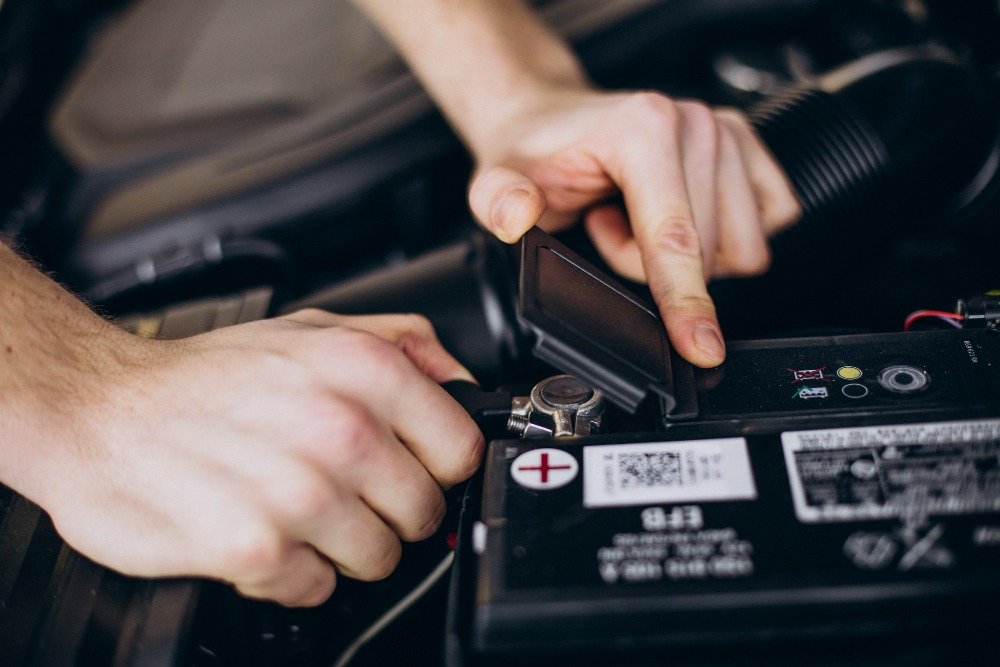
The symptoms are recognisable. You turn the key and hear one of the following:
- A slow, laboured crank that grows weaker with each attempt
- A rapid clicking that indicates some current but not enough to engage the starter motor
- Complete silence if the battery is fully depleted
On a manual vehicle, pressing the clutch fully when starting reduces the load on the starter motor by disconnecting the gearbox. This simple step can sometimes make the difference between a reluctant start and a failed one on a cold morning with a borderline battery.
If your battery is showing signs of weakness or the car has already needed a jump start, it is worth having the battery and charging system checked rather than waiting for another failed start. You can also view Ash Road Service Centre on Google to check the garage location, opening information and customer reviews before arranging an inspection.
| Battery Age | Cold Weather Risk Level | Recommended Action |
| Under 2 years | Low | Monitor, no immediate action needed |
| 2 to 3 years | Medium | Annual battery test recommended |
| 3 to 4 years | High | Test before winter, consider replacement |
| Over 4 years | Very high | Replace proactively before cold season |
2. Thickened Engine Oil
Engine oil does not freeze, but it thickens considerably in cold temperatures, creating greater resistance throughout the engine. The starter motor, already drawing heavily on a cold battery, must now work significantly harder to spin the engine through this viscous oil.
The symptom is a slow, heavy crank that sounds laboured and eventually gives up, sometimes producing a brief splutter before dying. Using the correct viscosity grade matters enormously here. The W rating in an oil’s specification, such as 5W in a 5W-30, indicates its cold-weather behaviour: the lower the W number, the thinner the oil remains at low temperatures. Oil that has degraded through age and use also thickens more readily than fresh oil, amplifying cold-start difficulty on a car that is overdue for a service.
3. A Failing Alternator
The alternator recharges the battery while the engine runs. In winter, demand on it increases significantly: headlights on for longer, heated rear screens, heated seats, the blower motor at higher settings, and windscreen wipers all draw continuous current. If the alternator is not keeping pace, the battery depletes slowly over successive drives until it no longer holds enough charge for a cold-morning start.
The key distinction between a battery fault and an alternator fault is what happens after a jump start:
- Battery fault: the car sustains itself after jump leads are removed, and the alternator recharges normally
- Alternator fault: the car dies within minutes of the leads being removed; the battery is the only power source, and it is depleted
Other signs of alternator trouble include a battery warning light while driving, headlights that dim at idle and brighten when revved, and electrical systems behaving erratically during a journey.
4. Glow Plug Failure on Diesel Vehicles
Diesel engines rely on the heat generated by compressing air to ignite fuel. On cold mornings, the cylinder walls, pistons, and incoming air are all cold, so compressed air generates less heat than usual, making reliable ignition difficult. Glow plugs solve this by preheating the combustion chamber before start-up. When you turn the ignition key on a diesel and wait for the dashboard to prompt you to crank, the glow plugs are doing exactly this job.
When they fail, cold starting suffers noticeably.
| Glow Plug Condition | Cold-Start Effect | Other Symptoms |
| All plugs healthy | Clean, reliable cold start | No smoke, smooth idle from cold |
| One plug failed | Marginally extended crank time | Slight rough idle when cold |
| Two or more failed | Noticeably hard to start in cold | White smoke, rough running until warm |
| Full set failed | May not start at all below 5°C | White exhaust smoke, coil warning light on |
Most glow plugs last around 80,000 to 100,000 miles. Replacing them proactively before winter on a high-mileage diesel is considerably less expensive and disruptive than being stranded on a cold morning.
5. Moisture in the Fuel System
Petrol does not freeze at UK temperatures. However, moisture and condensation inside the fuel system can, and this causes more cold-weather no-starts than many drivers expect. Condensation forms inside a partially filled fuel tank as humid air enters when fuel is consumed. When temperatures drop, that moisture can freeze in the narrower fuel lines between the tank and the engine, blocking fuel delivery even when the gauge shows adequate fuel.
The engine cranks normally but never fires, and there is no obvious warning before it happens.
Keeping the fuel tank at least half full throughout winter significantly reduces the space where condensation can accumulate. A well-sealed fuel cap also limits moisture ingress. Diesel drivers face the additional risk of fuel gelling in very cold conditions, though UK forecourts automatically switch to a winter-blend diesel formulation during the colder months to address this.
6. Moisture on Ignition Components
Cold, damp conditions typical of a Hampshire winter create ideal conditions for moisture to settle on spark plug leads, ignition coils, and distributor caps on older vehicles. When moisture is present, the electrical current meant for the spark plug can leak to earth instead, weakening or eliminating the spark.
Signs this is the cause include:
- Engine cranks normally at full speed but misfires or hesitates
- Problem noticeably worse on very damp or foggy mornings
- Engine improves after running for a few minutes as components warm and dry
- Cracked or perished plug leads visible on inspection
Electrical contact cleaner applied to leads and coils removes surface moisture quickly as a short-term measure. Visibly damaged leads or coils need replacing through a proper service rather than repeated roadside intervention.
7. A Weakening Starter Motor
Cold temperatures increase the resistance a starter motor must overcome, and one already worn from age may manage in summer but struggle when that resistance increases in winter. The characteristic sound is a slow, grinding, or intermittent crank that does not build into a proper starting attempt.
A starter with a worn solenoid or internal dead spot may respond to nothing on a cold morning, or may spring to life after several attempts as the solenoid warms slightly. If the battery, alternator, fuel, and ignition have all been confirmed as healthy, and the car still fails to crank reliably in cold conditions, the starter motor is the likely remaining cause.
What to Do in the Moment
If your car will not start on a cold morning, work through these steps before calling for assistance:
- Switch off everything that draws power. Heated seats, rear demister, radio, and all other accessories reduce the current available to the starter motor. Turn them all off before your first crank attempt.
- Press the clutch fully on a manual car. This disconnects the gearbox from the starting process and meaningfully reduces the load on the starter motor.
- Allow the ignition to sit in the on position for several seconds before cranking. On a diesel, wait for the dashboard to confirm the glow plugs have completed their cycle before attempting to start.
- Do not crank for extended periods repeatedly. A maximum of five to ten seconds per attempt with a thirty-second pause between tries is the right approach. Repeated long cranks drain the battery further and risk flooding a petrol engine.
- If the car cranks slowly but will not start and jump leads are available, connect to a donor vehicle, allow it to run for several minutes, then attempt your start.
- If the car starts after a jump but dies shortly after the leads are removed, drive directly to a garage. This pattern points firmly to an alternator fault, not a battery fault.
Quick Diagnosis Guide
| What You Hear or See | Most Likely Cause | First Action |
| Slow, laboured crank that gives up | Weak battery or thick oil | Attempt jump start, press clutch on manual |
| Rapid clicking | Flat or severely weak battery | Jump start required immediately |
| Normal crank, petrol engine never fires | Flooding, moisture on ignition, fuel line ice | Wait 20 minutes, crank with accelerator to floor |
| Normal crank, diesel never fires | Glow plug failure | Allow full pre-heat cycle, book diagnostic |
| Starts after jump, dies when leads removed | Alternator fault | Drive directly to a garage without delay |
| Complete silence, dashboard lights on | Starter motor, relay, or immobiliser | Check battery terminals, try spare key |
| White exhaust smoke on cold diesel start | Glow plug wear | Book glow plug inspection promptly |
Preparing Your Car Before Cold Weather Arrives
The most effective response to cold-weather starting problems is to address them before the cold arrives rather than after the car refuses to start. A pre-winter service is the single most comprehensive preparation available, and it covers exactly the components most vulnerable to cold-weather failure.
A thorough service carried out in September or October covers:
- Battery condition testing under load, not just voltage
- Oil change to the correct grade for cold conditions
- Coolant concentration check to confirm adequate freeze protection
- Glow plug condition on diesel vehicles
- Spark plugs and ignition lead condition on petrol vehicles
- Alternator output and belt condition
- Fuel system check for leaks or blockages
Beyond the service interval, a few simple habits make a meaningful difference throughout winter:
- Keep the fuel tank at least half full to reduce condensation and maintain fuel pump cooling
- Check oil level and condition monthly during winter months
- Park in a garage or sheltered position where possible to reduce the overnight temperature drop on the battery
- Run the air conditioning periodically through winter to maintain seals and refrigerant pressure
If your air conditioning has already been underperforming, it is worth addressing this before spring.
Does Cold Weather Affect Your MOT?
Cold-weather starting problems do not automatically mean a vehicle will fail its MOT. However, the underlying fault may be relevant if it causes a warning light, emissions problem or another defect that is checked during the test.
For example, an engine-management or emissions-related fault can affect the MOT depending on the vehicle and the warning indicator displayed. Poor engine operation can also affect emissions performance. If your car has recently developed starting problems, warning lights or unusual running issues, it is sensible to have the cause diagnosed before the MOT rather than relying on the test to identify it.
If your MOT is due soon, arranging an MOT in Aldershot alongside a pre-test inspection can help identify faults that may need attention before the test.
Conclusion
A car that will not start on a cold morning is rarely beyond straightforward resolution, and it is rarely caused by something that could not have been caught and addressed beforehand. The battery is the most frequent culprit by a significant margin, but thickened oil, alternator underperformance, glow plug failure on diesel vehicles, moisture in the ignition or fuel system, and a weakening starter motor all contribute to the winter breakdown statistics every year.
The most important thing to take from this guide is the value of preparation. A car that receives a thorough pre-winter service, with battery condition checked, oil freshly changed to the correct grade, and ignition or glow plug components confirmed as healthy, rarely causes its driver a cold-morning crisis. The one that does is almost always the car that has been running on borderline components through summer and simply ran out of margin when October arrived.
Frequently Asked Questions
Why does my car struggle to start only on cold mornings but start fine once warm?
This is a classic pattern of a battery approaching the end of its life. Cold temperatures reduce a battery’s effective capacity significantly, and one that has just enough charge in mild conditions may not have enough to overcome the extra resistance of cold oil and a cold engine. A battery load test will confirm whether replacement is due.
How Can I Tell Whether the Battery or Alternator Is Causing the Problem?
Jump-start the car and remove the leads. If the car sustains itself and runs normally, the alternator is working, and the battery was the issue. If the car dies within a few minutes of the leads being removed, the alternator is not recharging the battery and is the primary fault.
My diesel takes much longer to start on cold mornings but eventually fires. Is this a glow plug issue?
Extended cranking before a cold start on a diesel is one of the earliest signs of glow plug wear. A single failed plug may produce only marginal difficulty, but two or more failed plugs will noticeably extend crank time in cold conditions. A diagnostic check will confirm which plugs have failed.
Can leaving the car unused for several days in winter make cold-start problems worse?
Yes. A battery self-discharges slowly even when unused, and modern cars draw a small continuous current for alarms, clocks, and computer memory. A battery left for several cold days, already reduced in capacity by low temperatures, may not have enough remaining charge to crank the engine on return.
Does the type of oil affect cold-start performance?
Significantly. Oil viscosity determines how freely oil flows at low temperatures, and thicker oil creates greater resistance for the starter motor. Using the correct grade for your vehicle, particularly a low W-rated oil such as 5W-30, and keeping it freshly changed makes a measurable difference to cold-start reliability.
Should I let my car idle to warm up before driving in winter?
Modern fuel-injected vehicles do not need extended idling. Driving gently from the outset warms the engine more effectively than sitting stationary. A minute or so to allow oil pressure to build and the windscreen to begin clearing is sufficient before setting off carefully.
READ MORE: clocktimes