
The Breitling Navitimer is one of the most recognisable luxury watches in the world, widely regarded as a symbol of aviation-inspired engineering and mechanical artistry. Designed for pilots and aviation professionals, it blends functionality with timeless aesthetics in a way few wristwatches have ever achieved. From its early introduction in the 1950s to its modern-day interpretations, the Navitimer has remained a defining piece in the world of horology. What makes the Navitimer especially unique is its identity as both a tool and a luxury accessory, offering a rare combination of practical flight calculation capability and refined Swiss craftsmanship. The watch is not just about telling time; it represents a legacy of precision, innovation, and adventure that continues to attract collectors, pilots, and enthusiasts around the world. Its signature design, dominated by the complex dial and rotating bezel, has become an enduring icon in the luxury watch industry.
History and Evolution of the Navitimer
At a time when aviation technology was still developing, pilots needed a wrist-worn instrument capable of performing essential calculations. This led to the creation of a watch equipped with a circular slide rule, allowing users to perform calculations related to speed, distance, and fuel consumption. Over the decades, the Navitimer evolved while maintaining its core identity. It gained popularity not only among aviation professionals but also among watch collectors who admired its technical sophistication and bold design. Throughout its evolution, it has remained true to its roots, preserving its aviation DNA while adapting to modern manufacturing standards and aesthetic expectations.
Design and Signature Slide Rule Feature
One of the most defining characteristics of the Breitling Navitimer is its circular slide rule bezel, a feature that sets it apart from almost every other wristwatch. This intricate system allows users to perform mathematical calculations by rotating the bezel in relation to the dial. While it may appear complex at first glance, it was once an essential tool for pilots navigating long-distance flights. The dial itself is equally distinctive, featuring multiple subdials, scales, and markers that create a highly technical and layered appearance. Even with its intricate layout, the design still feels balanced and harmonious, drawing in luxury watch enthusiasts. The case design has also evolved, with sizes ranging from more compact modern interpretations to larger traditional styles. Materials such as stainless steel, gold, titanium, and platinum further enhance the versatility and prestige of the watch. The overall aesthetic of the Navitimer reflects a perfect fusion of functionality and elegance.
Movement and Mechanical Excellence
At the heart of the Breitling Navitimer lies its mechanical movement, which represents the technical backbone of the watch. This movement features a column wheel and vertical clutch system, ensuring smooth chronograph operation and long-term durability. It also offers an impressive power reserve, making it practical for daily wear. Non-chronograph models often use the Calibre 17, a trusted Swiss movement known for its accuracy and stability. These mechanical systems highlight the brand’s commitment to horological excellence. The transparency of modern models, often featuring exhibition case backs, allows wearers to appreciate the intricate mechanical architecture inside.
Key Models and Variations
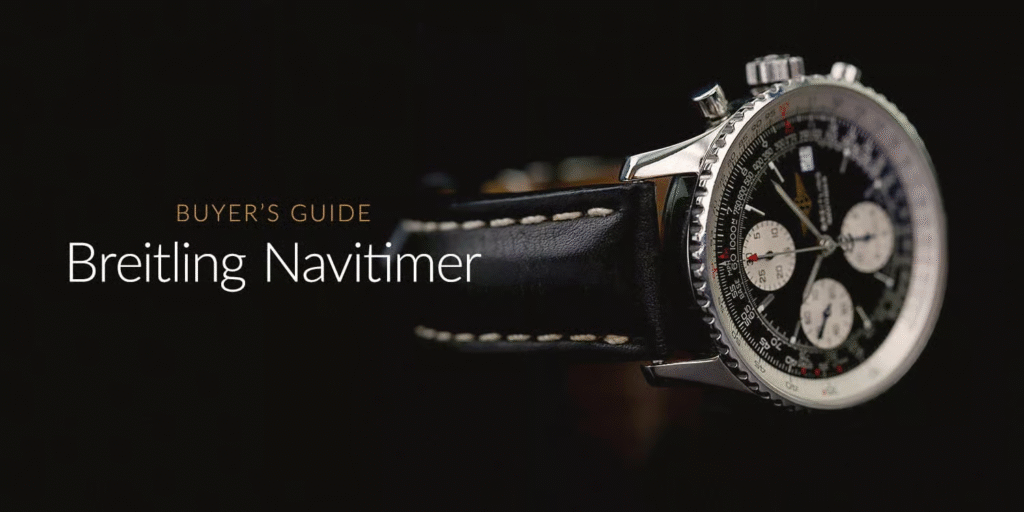
The Breitling Navitimer collection includes several important models that cater to different preferences and lifestyles. Even with its intricate layout, the design still feels balanced and harmonious, drawing in luxury watch enthusiasts. This makes it more suitable for everyday wear while preserving the identity of the Navitimer. Another standout is the Navitimer B19 Perpetual Calendar 43, which elevates the watch into haute horlogerie territory with one of the most complex complications in watchmaking. The Navitimer Cosmonaute remains a historically significant model, distinguished by its 24-hour dial designed for space travel conditions. Each variation reflects a different interpretation of the same core design philosophy.
Aviation Heritage and Cultural Importance
The aviation heritage of the Breitling Navitimer is central to its identity. Created as a tool for pilots, it quickly became a symbol of aviation culture and engineering excellence. The watch’s association with early commercial and exploratory flight gave it a reputation as a professional instrument rather than just a luxury accessory. Over time, it became a cultural icon, worn by aviation enthusiasts, collectors, and even astronauts. Its presence in both aviation and space exploration narratives has solidified its status as a historically significant timepiece. The Navitimer represents a period in history when mechanical instruments played a critical role in navigation and exploration, making it more than just a watch—it is a piece of technological heritage.
Why the Navitimer Remains Popular
The continued popularity of the Breitling Navitimer can be attributed to its unique combination of heritage, design, and mechanical complexity. Unlike many modern watches that focus on minimalism, the Navitimer embraces complexity and technical detail. This makes it appealing to enthusiasts who appreciate traditional watchmaking craftsmanship. Its strong visual identity ensures that it stands out on the wrist, while its historical significance adds emotional value. Additionally, the variety of models allows it to appeal to both collectors and casual wearers. Whether used as a statement piece or a functional instrument, the Navitimer continues to hold a strong position in the luxury watch market.
Collectibility and Market Value
In the world of luxury watches, the Breitling Navitimer holds strong collectibility due to its long production history and iconic status. Vintage models, especially early references, are highly sought after by collectors who value originality and historical relevance. Modern limited editions and special complications also attract attention in the secondary market. The watch’s value is influenced by factors such as condition, rarity, and movement type. While it is not positioned as a speculative investment piece, its reputation ensures steady demand among enthusiasts. Collectors often appreciate the Navitimer for its consistency in design language, which has remained recognisable for decades despite technological advancements.
Conclusion
The Breitling Navitimer stands as one of the most important creations in the history of luxury watchmaking. Its combination of aviation heritage, mechanical innovation, and distinctive design has allowed it to remain relevant for more than half a century. From its origins as a pilot’s tool to its modern status as a luxury icon, the Navitimer continues to represent precision, craftsmanship, and adventure. It is not just a timekeeping instrument but a symbol of human ingenuity and exploration. For collectors and enthusiasts alike, it remains a benchmark of what a mechanical watch can achieve when functionality and artistry are perfectly balanced.
FAQs
1. What makes the Breitling Navitimer unique?
The Navitimer is unique because of its circular slide rule bezel, which allows complex aviation calculations and sets it apart from traditional luxury watches.
2. Is the Navitimer suitable for everyday wear?
Yes, especially modern models like the Navitimer Automatic 41, which offer a simpler and more wearable design while maintaining the classic look.
3. What movement does the Navitimer use?
Most chronograph models use the in-house Calibre B01, while simpler versions use the Calibre 17 Swiss movement.
4. Why is the Navitimer associated with aviation?
It was originally designed for pilots in the 1950s and includes tools for navigation and flight calculations, making it an aviation instrument.
5. Is the Navitimer a good collector’s watch?
Yes, it is highly collectable due to its history, design evolution, and strong brand heritage within luxury watchmaking.
READ MORE: clocktimes