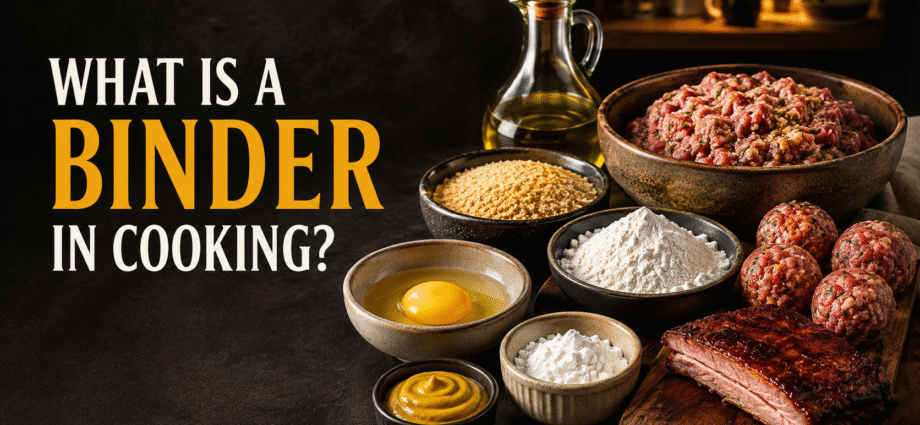
A perfectly shaped meatball, a veggie burger that stays together, and seasoning that remains on smoked meat all have something in common: they often depend on a binder. But what is a binder in cooking, and why does such a small ingredient make such a noticeable difference? A binder is an ingredient that connects other ingredients, helping a mixture maintain its shape, texture, or moisture. It may also help herbs and spices stick to the outside of food. Different binders perform different jobs, so choosing the right one can improve both preparation and final results.
What Is a Binder in Cooking?
A binder in cooking is an ingredient that holds separate components together or helps one ingredient adhere to another. Inside a recipe, it can connect pieces of meat, vegetables, grains, or dry ingredients to produce a stable mixture. On the surface of food, it may work like a thin layer of edible glue that keeps seasoning in place. Eggs, breadcrumbs, flour, cornstarch, mayonnaise, mustard, and gelatin are familiar examples. Although all are called binders, they do not work identically. Some become firm when heated, while others absorb liquid, create stickiness, or set as they cool.
Why Are Binding Agents Important?
Binding agents improve the structure and consistency of food. Without a suitable binder, meatballs may crumble in the frying pan, fish cakes can fall apart when flipped, and veggie patties may break before reaching the plate. A binder distributes moisture and helps loose components behave like one complete mixture. It can also make portions easier to shape and cook evenly. In baking, binders support the structure of cakes, cookies, and breads. During barbecue preparation, a surface binder helps dry seasoning cover meat more evenly, reducing the amount that falls away while the food is handled or placed in a smoker.
Internal and External Binders
Cooking binders can be divided into two broad groups: internal binders and external binders. Internal binders are mixed directly into food. Egg added to meatballs, breadcrumbs stirred into crab cakes, and flour used in batter are common examples. Their job is usually to create cohesion throughout the mixture. External binders are spread in a thin coating over the surface of food. Mustard, oil, mayonnaise, and hot sauce are frequently used on meat before a dry rub is applied. These surface binders primarily help spices adhere, although they can also influence browning, moisture, and the finished crust.
Eggs as a Traditional Binder
Eggs are among the most useful and widely used binding ingredients. Their proteins change and firm up when exposed to heat, helping surrounding ingredients stay connected. This makes eggs valuable in meatloaf, burgers, meatballs, casseroles, cakes, and many baked dishes. Both the yolk and white contribute, though they behave differently. The white provides strong protein-based structure, while the yolk adds fat, richness, and emulsifying power. Too much egg can make a mixture rubbery, dense, or overly wet. The correct quantity depends on the recipe, but usually only enough egg is needed to lightly coat and connect the other ingredients.
Breadcrumbs, Flour, and Starch
Dry binders such as breadcrumbs, flour, and cornstarch work mainly by absorbing moisture and thickening a mixture. Breadcrumbs are especially useful in meatballs, meatloaf, stuffing, and vegetable patties because they hold liquid while keeping the texture tender. Flour helps create structure in dough, batter, sauces, and baked foods. Cornstarch thickens quickly and can bind fillings, sauces, and mixtures without adding a strong flavor. Oats, cracker crumbs, ground cereal, and potato starch may perform similar roles. Adding too much dry binder can produce a heavy or dry result, so it should be incorporated gradually until the mixture becomes manageable.
Binders Used for Barbecue
In barbecue, a binder is usually a thin wet coating applied before the dry rub. Common choices include yellow mustard, olive oil, mayonnaise, Worcestershire sauce, and hot sauce. The coating helps spices remain evenly distributed across brisket, ribs, pork shoulder, chicken, or other meats. Yellow mustard is popular because it spreads easily and its sharp flavor generally becomes much milder during long cooking. Oil encourages adhesion and may assist surface browning, while hot sauce adds gentle heat. Only a light coating is necessary. A thick layer may make the seasoning patchy or prevent the desired crust from developing properly.
Do Binders Add Flavor?
Some binders are nearly neutral, while others contribute noticeable flavor. Cornstarch and plain flour usually have little effect when used correctly. Eggs and breadcrumbs can add mild richness or texture without dominating a recipe. Mustard, hot sauce, mayonnaise, and Worcestershire sauce have stronger personalities, although their flavors often soften during cooking. The final impact depends on the amount used, cooking time, temperature, and other seasonings. When flavor is important, the binder should complement the dish. For example, a spicy sauce may suit smoked chicken, while a neutral oil may be better when the dry rub should remain the main flavor.
Moisture Retention and Texture
A binder can help manage moisture, but it does not always seal juices inside food. Ingredients such as breadcrumbs and oats absorb available liquid, which can keep meat mixtures tender during cooking. Eggs create structure that holds ingredients and moisture together. Gums, gelatin, and certain starches can thicken or stabilize liquids, giving food a smoother or firmer texture. However, balance matters. Excessive binding can make food dense, gummy, or tough, while too little can leave it loose and crumbly. The best texture comes from selecting a binder that matches the recipe and using only the amount needed to create stability.
Plant-Based and Gluten-Free Options
Cooks who avoid eggs, dairy, or gluten still have many effective options. Ground flaxseed mixed with water forms a gel that can replace egg in some baked goods and patties. Chia seeds behave similarly, while mashed potato, cooked rice, nut butter, and bean purée can provide cohesion in savory mixtures. Gluten-free breadcrumbs, rice flour, potato starch, and cornstarch are useful for people avoiding wheat. Xanthan gum and psyllium husk can improve structure in gluten-free baking, but small amounts are usually sufficient. No substitute works perfectly in every recipe, so the choice should reflect whether the food needs firmness, moisture, elasticity, or surface adhesion.
How to Use a Binder Correctly
For an internal binder, combine it evenly with the other ingredients before shaping or cooking. Avoid overmixing ground meat because excessive handling can create a tough texture. After mixing, allow mixtures containing breadcrumbs, oats, or flaxseed to rest briefly so the binder can absorb moisture. For an external barbecue binder, pat the meat dry and spread a very thin, even coating over every surface. Apply the seasoning immediately afterward and press it gently into place. Consider cooking temperature as well: eggs and starches usually need heat to set, while gelatin firms during cooling. Correct application helps the binder perform without becoming noticeable.
Common Binder Mistakes
The most common mistake is using too much. More binder does not always create better structure and may instead make food dry, rubbery, pasty, or heavy. Another error is choosing an ingredient that does not match the cooking method. Gelatin is excellent for chilled preparations but unsuitable as the main structural binder in a hot burger. Wet mixtures may need an absorbent ingredient, while dry mixtures may require egg, oil, or another source of moisture. Cooks should also avoid applying barbecue binders too thickly. Start with a modest amount, check the consistency, and add more only when the mixture cannot hold its intended shape.
Frequently Asked Questions
What is the best binder for meatballs?
A combination of egg and breadcrumbs is often best for meatballs. Egg provides structure, while breadcrumbs absorb moisture and help keep the inside tender. Use moderate amounts to avoid dense meatballs.
Can mayonnaise be used as a binder?
Yes, mayonnaise can work as both a surface and internal binder. It helps seasoning adhere to meat and can add moisture to recipes such as burgers or baked chicken.
Is mustard necessary as a barbecue binder?
No, mustard is optional. Many dry rubs stick naturally to moist meat. Mustard simply improves adhesion and helps create an even coating without leaving a powerful flavor after slow cooking.
What can replace eggs as a binder?
Useful egg replacements include flaxseed gel, chia gel, mashed potato, breadcrumbs with liquid, aquafaba, and commercial egg substitutes. The best choice depends on the food and desired texture.
Can water be used as a binder?
Water alone is not a strong binder, but a small amount can help dry seasoning adhere temporarily. It works better when combined with starch, flour, flaxseed, or another binding ingredient.
Conclusion
Understanding what is a binder in cooking makes it easier to solve common problems involving texture, shape, seasoning, and moisture. Eggs provide heat-set structure, breadcrumbs and starches absorb liquid, while mustard, oil, and sauces help dry rubs remain on meat. Plant-based and gluten-free alternatives also make it possible to achieve reliable results for different diets. The key is not simply adding a binder, but choosing one that fits the recipe and using it carefully. With the right balance, food stays together, cooks more evenly, and reaches the table with a better texture and appearance.
READ MORE: clocktimes