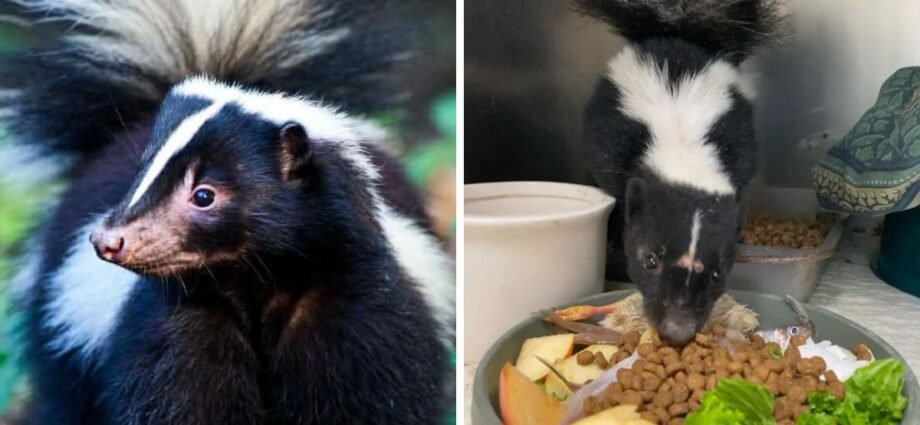
If you have ever wondered what skunks eat, you are not alone. Skunks are fascinating animals that have adapted to survive in forests, grasslands, farms, and even suburban neighbourhoods. While they are best known for their powerful defensive spray, their eating habits are equally interesting. Skunks are opportunistic omnivores, meaning they consume both plant and animal foods depending on what is available throughout the year. Their diet constantly changes with the seasons, allowing them to thrive in different environments. Rather than hunting large prey, skunks prefer foods that are easy to find, making them excellent foragers. Using their keen sense of smell and powerful front claws, skunks dig through soil, flip over rocks, and rummage beneath leaf litter to uncover insects and small prey. This flexible feeding behaviour helps them survive in changing conditions and contributes to their important role in maintaining a balanced ecosystem.
The Natural Diet of Wild Skunks
The natural diet of wild skunks is incredibly diverse because these mammals eat whatever food is most abundant. During the warmer months, insects become the primary food source. Beetles, grasshoppers, crickets, caterpillars, grubs, earthworms, and other insects make up a significant portion of their meals. Skunks also feed on spiders and larvae hidden beneath logs and loose soil. Besides insects, they hunt small mammals such as mice, voles, and young rats whenever the opportunity arises. They may also eat frogs, salamanders, lizards, and small snakes. Although skunks can handle venomous snakes better than many animals, they are not completely immune to snake venom. Alongside animal foods, they consume berries, fallen fruits, nuts, seeds, mushrooms, and various plant materials. Their ability to combine different food sources ensures they receive a balanced supply of nutrients throughout the year.
Seasonal Changes in a Skunk’s Diet
One of the most interesting aspects of what do skunks eat is how their diet changes from season to season. In spring and summer, insects become highly abundant, making them the preferred food. During these months, skunks spend much of the night digging for grubs and insects hidden beneath lawns and forest floors. As autumn arrives, insects become less available, causing skunks to shift toward fruits, berries, nuts, acorns, grains, and small rodents. This seasonal change helps them build fat reserves before winter. During cold winter months, skunks become much less active, especially in regions with harsh weather. They do not truly hibernate but may remain inside their dens for several days or weeks during severe cold. Whenever they emerge, they feed on whatever food they can find, including rodents, carrion, seeds, and leftover plant material.
How Skunks Hunt and Find Their Food
Skunks are primarily nocturnal animals, meaning they search for food after sunset. Instead of relying on excellent eyesight, they depend heavily on their powerful sense of smell. Their long claws are perfectly designed for digging through loose soil, leaf litter, and rotting wood in search of insects and underground nests. Skunks often investigate logs, tree roots, and rock piles where insects and small animals hide. They also use patience rather than speed when catching prey. Unlike predators that chase animals over long distances, skunks quietly approach their food before capturing it. Their adaptable feeding behaviour allows them to locate meals even when conditions become difficult, making them highly successful survivors in many different habitats.
Foods Skunks Eat Around Homes and Neighbourhoods
As human development expands, skunks have become common visitors to suburban and urban areas. These adaptable animals quickly learn to take advantage of easily accessible food sources. One of the biggest attractions is outdoor pet food left overnight, which provides a convenient meal with little effort. Unsecured garbage cans and compost piles also contain leftovers that skunks eagerly consume. Fallen fruit beneath backyard trees, spilt birdseed under feeders, and lawn insects all attract skunks into residential neighbourhoods. Many homeowners notice small cone-shaped holes in their lawns caused by skunks digging for beetle larvae and grubs. Although this digging may appear destructive, it actually helps reduce insect populations that can damage grass and gardens.
What Do Baby Skunks Eat?
Baby skunks, also called kits, begin life feeding entirely on their mother’s milk. During the first several weeks, this milk supplies every nutrient they need for healthy growth and development. As they mature, their mother gradually introduces them to solid foods by bringing insects, worms, and other easily digestible prey back to the den. Eventually, the young skunks accompany their mother on nighttime foraging trips where they learn how to locate insects, dig for grubs, and identify safe food sources. By the time they become independent, they are capable of eating nearly the same variety of foods as adult skunks.
What Should Pet Skunks Eat?
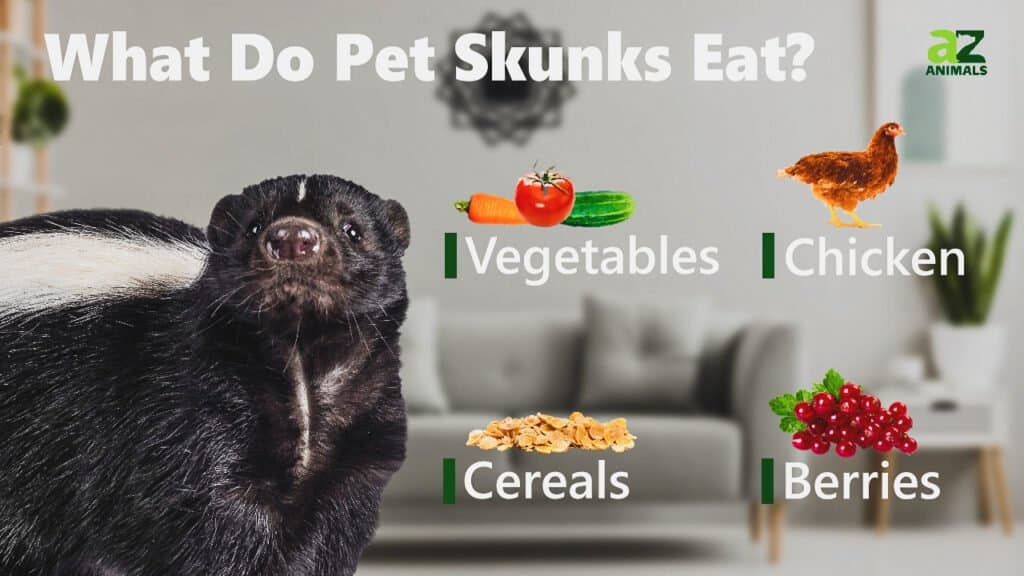
Although pet skunks are legal in only certain locations, they require a carefully balanced diet that differs from the foods eaten by wild skunks. A healthy captive diet usually includes lean cooked poultry, eggs, fresh vegetables, limited fruits, and specially formulated omnivore diets designed to meet their nutritional needs. Veterinarians often recommend calcium and vitamin supplements to prevent deficiencies. Owners should avoid feeding excessive fatty foods because pet skunks are especially prone to obesity. Processed snacks, sugary foods, chocolate, onions, excessive dairy products, and foods high in salt should never be included in their diet. Proper nutrition plays a major role in maintaining healthy body weight, strong bones, and overall long-term health.
Why Skunks Are Beneficial to the Environment
Many people think only about a skunk’s unpleasant odour, but these animals provide several valuable environmental benefits. By consuming thousands of insects every year, skunks naturally reduce populations of agricultural and garden pests. Their appetite for beetle larvae, grasshoppers, caterpillars, and rodents helps protect crops, lawns, and forests from damage. They also assist in cleaning up the environment by eating carrion, reducing waste left by dead animals. As they dig for insects, skunks naturally aerate the soil, allowing water and oxygen to penetrate more effectively. These ecological contributions make skunks far more beneficial than many people realise.
Common Foods Skunks Should Avoid
Although skunks are capable of eating a wide variety of foods, not everything is safe for them. Highly processed human foods often contain excessive sugar, salt, preservatives, and unhealthy fats that can negatively affect their health. Chocolate contains compounds that are toxic to many mammals, while onions and certain artificial sweeteners may also cause serious health problems. Mouldy foods, spoiled leftovers, and contaminated garbage can expose skunks to dangerous bacteria and parasites. Even in the wild, their digestive systems perform best when they consume natural foods that match their biological needs rather than processed human meals.
Frequently Asked Questions
1. What do skunks eat the most?
Skunks primarily eat insects, including beetles, grubs, grasshoppers, crickets, caterpillars, and earthworms, especially during spring and summer.
2. Do skunks eat mice?
Yes. Skunks regularly hunt and eat mice, voles, young rats, and other small mammals whenever they have the opportunity.
3. Are skunks dangerous to chickens?
Skunks can eat chicken eggs and may occasionally attack young chicks, but they are generally more interested in eggs than adult chickens.
4. Do skunks eat fruits and vegetables?
Yes. Skunks enjoy berries, apples, grapes, cherries, and many seasonal fruits, along with certain vegetables and plant materials.
5. Can skunks survive in cities?
Absolutely. Skunks adapt well to urban environments by feeding on insects, garbage, fallen fruit, birdseed, compost, and outdoor pet food.
Conclusion
Understanding what skunks eat reveals just how adaptable these remarkable mammals truly are. Their diet includes insects, small mammals, fruits, berries, eggs, nuts, seeds, and many other natural food sources that change throughout the seasons. Their excellent sense of smell, strong digging claws, and flexible feeding habits allow them to survive in forests, fields, farms, and suburban neighbourhoods alike. Beyond simply finding food, skunks provide important ecological benefits by controlling insect and rodent populations while helping maintain healthy ecosystems. Whether encountered in the wild or studied for educational purposes, learning about what skunks eat offers valuable insight into one of North America’s most misunderstood yet environmentally beneficial animals.
READ MORE: clocktimes