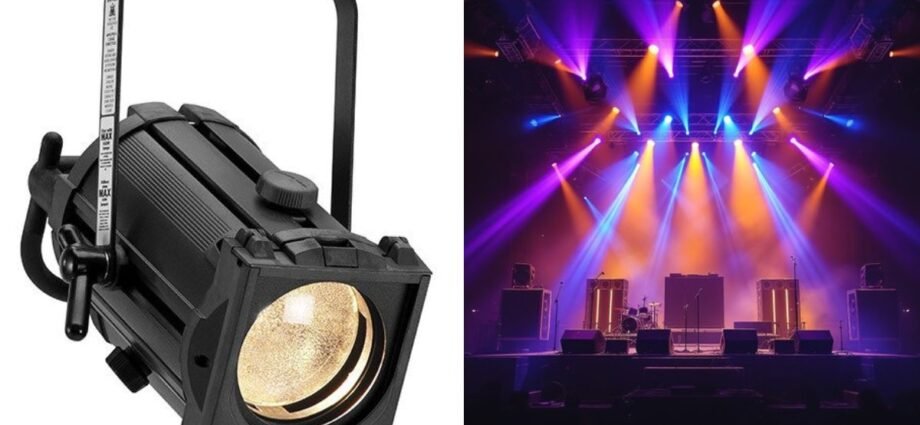
The world of stage lighting relies heavily on precision, control, and artistic flexibility, and among the most important fixtures used in theatrical environments is the pebble convex lantern. This lighting instrument plays a crucial role in shaping how performances are visually perceived, offering a balanced blend between soft wash lighting and tightly controlled spot illumination. Unlike overly diffused or sharply focused fixtures, the pebble convex provides lighting designers with a versatile middle ground that supports both aesthetic softness and functional directionality. It is especially valued in theatres, concert stages, and broadcast environments where lighting must appear natural yet remain highly controllable. By combining optical refinement with practical beam shaping, the pebble convex has become a dependable tool for creating visually comfortable yet structured stage environments that enhance both performers and set design.
What is Pebble Convex Lighting?
The pebble convex lantern is a type of theatrical spotlight that uses a modified plano-convex lens system to produce a semi-soft beam of light. The defining feature of this fixture is its unique lens design, where one side of the lens remains smooth while the other is textured with a pebbled or stippled surface. This surface treatment is what gives the pebble convex its characteristic light quality, as it disrupts the direct path of light rays and redistributes them more evenly across the beam.
The result is a lighting output that avoids harsh central hotspots while still maintaining a defined and usable beam edge. In practical terms, this means stage lighting can be more visually pleasing without sacrificing control, making the pebble convex ideal for both atmospheric and focused lighting tasks in live performance environments.
Optical Design and Working Principle
At the heart of the pebble convex system lies its carefully engineered optical structure. The lamp is positioned within a movable carriage that can be adjusted closer to or further from the lens, allowing the beam angle to be modified with precision. When light passes through the pebbled surface of the lens, it is subtly scattered in multiple directions, which helps eliminate the concentrated intensity often seen in standard convex lenses.
This scattering effect is not random but controlled, ensuring that the beam edge remains consistent and visually smooth rather than fragmented. Unlike a Fresnel lens, which relies on stepped concentric rings to shape and soften light, the pebble convex achieves its diffusion through surface texture, resulting in a more uniform field. This optical behaviour makes it particularly effective in situations where lighting must appear natural while still maintaining directional intent.
Advantages of Pebble Convex Fixtures
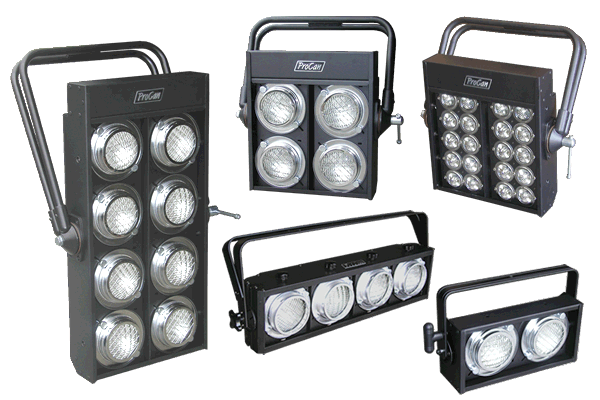
One of the primary advantages of the pebble convex lantern is its ability to strike a balance between softness and control. While a Fresnel fixture may produce a very soft wash with significant spill, and a profile spotlight may produce a hard-edged beam with precise boundaries, the pebble convex sits comfortably in between these extremes. It reduces unwanted light spill while still maintaining a gentle falloff that feels visually organic on stage.
Another significant benefit is its ability to produce a clean and evenly distributed beam without the intense hotspot commonly associated with basic convex optics. This makes it highly desirable for front-of-house positions where audience comfort is important. Additionally, the pebble convex is relatively simple to operate, requiring only basic focus adjustments through lamp carriage movement, which allows lighting technicians to achieve consistent results quickly during live production setups.
Applications in Stage Lighting
The versatility of the pebble convex makes it suitable for a wide range of theatrical and performance applications. In front-of-house lighting positions, it is commonly used to illuminate performers from a distance without creating glare or overwhelming brightness for the audience. Its controlled yet soft output ensures that facial features are visible while maintaining a natural stage presence. On stage, the pebble convex is frequently employed for special lighting effects, where a specific actor or object needs to be highlighted without the harsh isolation produced by a profile spotlight. It is also effective in overhead lighting rigs, where multiple fixtures must blend seamlessly to create a unified visual environment. In concert lighting, it helps create depth and mood without overpowering dynamic effects, making it a reliable tool for both subtle enhancement and functional illumination.
Pebble Convex vs Fresnel vs Profile Spotlight
When comparing the pebble convex to other stage lighting instruments, its unique position becomes even clearer. A Fresnel lantern is known for its extremely soft beam and high level of light spill, making it ideal for broad washes but less suitable for controlled lighting tasks. On the other hand, a profile spotlight provides sharp edges and precise beam shaping through internal shutters, allowing for detailed control and projection capabilities.
The pebble convex bridges these two extremes by offering a semi-soft beam edge with significantly reduced spill compared to a Fresnel, while still avoiding the rigid hardness of a profile fixture. This middle-ground functionality makes it particularly valuable in productions where lighting needs to feel natural yet structured. Designers often choose the pebble convex when they want clarity without harshness, or softness without losing definition.
Practical Considerations for Lighting Designers
Lighting designers often choose the pebble convex based on the specific emotional and visual requirements of a production. One important consideration is throw distance, as the fixture performs best at short to medium ranges where its beam characteristics can be fully appreciated. Another factor is blending capability, since multiple pebble convex units can overlap smoothly without creating visible boundaries between light pools. Maintenance and setup are also relatively straightforward, as the fixture does not require complex shutter alignment or advanced optical calibration. However, designers must be mindful that while the pebble convex offers improved control over spill, it does not replace the precision of a profile spotlight when sharp edges or gobos are required. Instead, it should be seen as a complementary tool that enhances lighting flexibility within a broader rig design strategy.
Conclusion
The pebble convex lantern remains an essential component of modern stage lighting due to its balanced optical characteristics and practical versatility. By combining controlled diffusion with moderate beam definition, it provides a unique solution that bridges the gap between soft wash fixtures and highly focused spotlights. Its ability to produce visually pleasing, evenly distributed light makes it invaluable in theatre, concerts, and broadcast environments where both clarity and atmosphere are required. While it may not replace more specialised fixtures, its role as a hybrid lighting tool ensures that the pebble convex continues to hold an important place in professional lighting design, offering reliability, simplicity, and artistic flexibility in equal measure.
FAQs
1. What is a pebble convex used for in stage lighting?
It is used to create a soft yet controlled beam for illuminating performers or stage areas without harsh edges or excessive light spill.
2. How is a pebble convex different from a Fresnel?
A Fresnel produces a softer and more diffused wash with more spill, while a pebble convex offers better beam control and a more defined light field.
3. Can a pebble convex replace a profile spotlight?
No, a profile spotlight provides sharp edges and precise shaping using shutters, which a pebble convex cannot achieve.
4. Why do lighting designers prefer pebble convex fixtures?
They are preferred for their balance of softness and control, making them ideal for natural-looking stage illumination.
5. Is pebble convex lighting suitable for concerts?
Yes, it is often used in concerts to create smooth, blended lighting effects without overpowering the stage atmosphere.
READ MORE: clocktimes