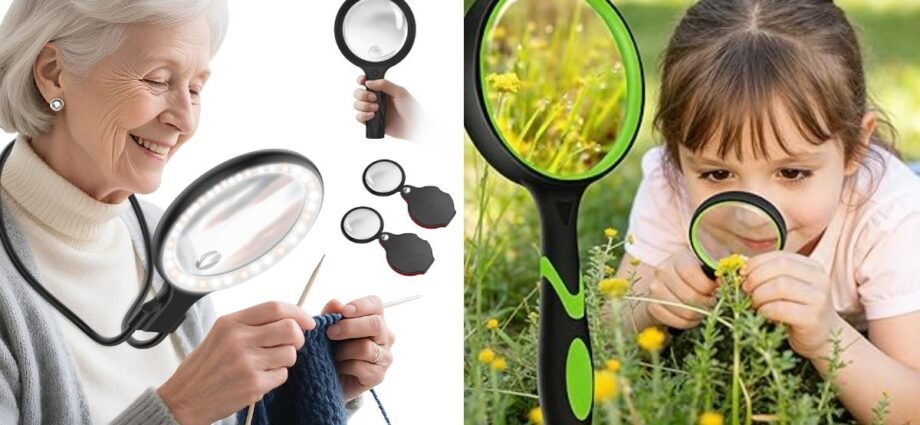
A magnifying glass is one of the simplest yet most practical optical tools ever created. Although it appears to be a basic handheld device, its ability to enlarge small objects has made it valuable in homes, schools, laboratories, workshops, and medical environments for centuries. Many people recognise it as a reading aid, but its uses extend far beyond helping someone read tiny text. From inspecting jewellery and repairing watches to studying insects and completing delicate craft projects, this versatile tool serves countless purposes across different industries. If you have ever wondered what a magnifying glass is used for, the answer includes a wide variety of personal, educational, scientific, and professional applications. Understanding its functions also helps users appreciate why it continues to remain relevant even in an age filled with advanced digital technology.
How Does a Magnifying Glass Work?
To understand what a magnifying glass is used for, it is helpful to know how it works. A magnifying glass contains a convex lens, which is thicker in the centre than around its edges. As light passes through the lens, it bends toward the centre, making nearby objects appear larger than they actually are. When an object is positioned within the lens’s focal length, the eye sees a magnified virtual image that reveals details that would otherwise be difficult to notice.
The quality of magnification depends on factors such as the lens material, its curvature, diameter, and the distance between the lens and the object. High-quality glass lenses often provide sharper images with less distortion than lower-cost plastic alternatives. While magnifying glasses do not match the power of microscopes, they offer a convenient and portable solution for everyday inspection and observation.
Reading Small Print with Greater Comfort
One of the most familiar answers to what is a magnifying glass used for is reading fine print. Many books, prescription labels, newspapers, contracts, maps, and instruction manuals contain text that can be difficult to read, especially for older adults or individuals with reduced vision. A magnifying glass enlarges letters, making reading more comfortable and reducing unnecessary eye strain.
People with mild vision difficulties often keep a magnifying glass nearby for daily tasks. Instead of struggling with tiny product labels or medicine instructions, they can quickly enlarge the text for easier reading. Students and professionals may also use magnifying glasses to examine detailed diagrams, technical drawings, and printed documents that require close attention.
Supporting Hobbies and Creative Activities
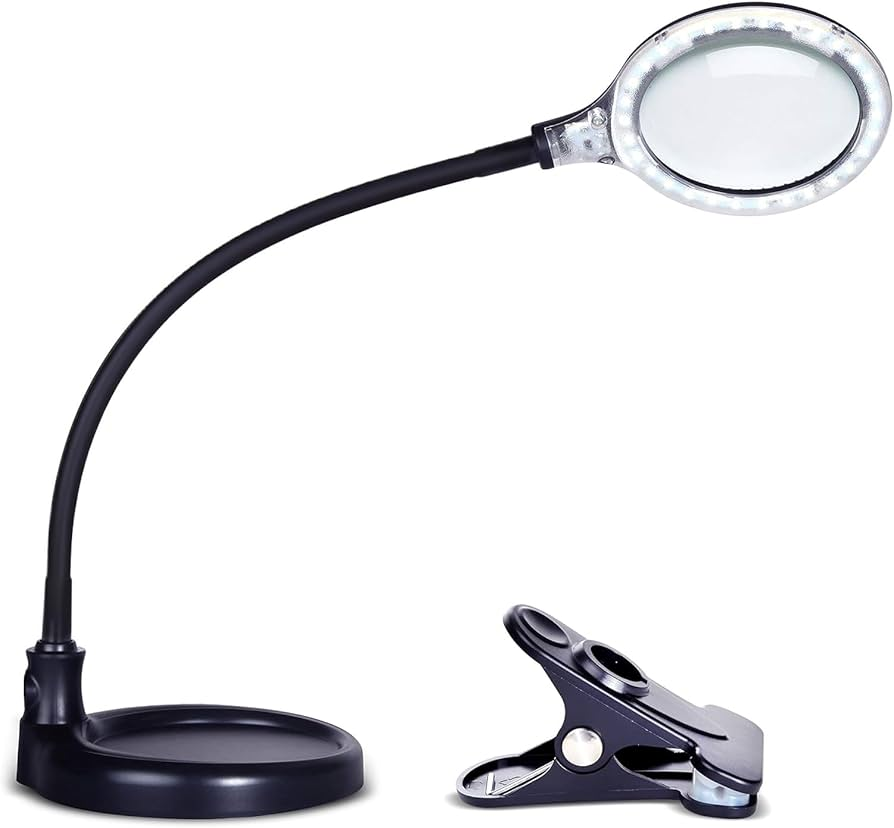
Many hobbyists rely on magnifying glasses because precision is essential in their work. Whether someone enjoys coin collecting, stamp collecting, model building, embroidery, painting miniature figures, or crafting jewellery, a magnifying glass helps reveal intricate details that are difficult to see with the naked eye.
Artists can inspect brush strokes and fine textures, while collectors use magnification to identify mint marks, printing variations, or signs of authenticity. Even puzzle enthusiasts may find magnifying glasses useful when examining tiny images or complicated designs. By improving visibility, the tool allows hobbyists to work more accurately and enjoy their activities with greater confidence.
Essential Tool for Professional Repairs
Another important answer to what is a magnifying glass used for involves professional repair work. Technicians who repair watches, clocks, jewellery, cameras, and electronic devices frequently work with components that measure only a few millimetres. Without magnification, identifying tiny cracks, loose connections, or damaged parts would be extremely challenging.
Watchmakers carefully inspect gears, springs, and delicate mechanisms before making repairs. Jewellers examine gemstones for imperfections, verify settings, and complete detailed engraving work. Electronics technicians use magnifying glasses to inspect solder joints, printed circuit boards, and miniature components found in smartphones, laptops, and other modern devices. The ability to enlarge these tiny parts improves both accuracy and efficiency.
Scientific Observation and Educational Learning
Magnifying glasses play a significant role in education and scientific observation. Students often use them during biology lessons to examine leaves, flowers, insects, rocks, feathers, and various natural specimens. The enlarged view helps learners understand textures, structures, and patterns that are normally difficult to detect.
Scientists and researchers also use magnification for preliminary examinations before turning to more advanced optical instruments. Field researchers studying plants, insects, minerals, or soil samples frequently carry handheld magnifying glasses because they are lightweight, portable, and require no electricity. Nature enthusiasts enjoy using them during outdoor exploration to discover details that enrich their understanding of the natural world.
Medical and Healthcare Applications
Healthcare professionals also benefit from magnification in their daily work. Dentists commonly use magnifying loupes, which are wearable magnification devices that provide a closer view of teeth and oral tissues. Surgeons use specialised optical equipment to improve precision during delicate procedures where even the smallest detail matters.
Dermatologists may use magnification while examining skin conditions, while laboratory technicians inspect biological samples during diagnostic work. Although these medical devices are more advanced than standard handheld magnifying glasses, they rely on the same optical principles. Better visibility often leads to improved accuracy and more effective treatment.
Everyday Household Uses
The usefulness of a magnifying glass extends well beyond professional environments. Many households keep one available for routine tasks. People use it to inspect product labels, identify tiny insects, examine fabrics, read serial numbers, or search for small scratches on household items. It is also useful for checking printed expiration dates on food packaging and medication.
Parents sometimes introduce children to magnifying glasses as educational tools, encouraging curiosity and observation. By using a magnifying glass to closely observe leaves, flowers, feathers, shells, and other everyday items, children can strengthen their observation skills while developing a deeper curiosity about the natural world.
Outdoor Survival and Fire Starting
A lesser-known answer to what is a magnifying glass used for involves outdoor survival. Because a convex lens can focus sunlight into a concentrated point, it can generate enough heat to ignite dry materials such as leaves, grass, or paper under favourable weather conditions. Survival experts sometimes demonstrate this method as an emergency fire-starting technique when conventional tools are unavailable.
Beyond survival, artists may use concentrated sunlight for wood-burning and creative engraving projects. However, users should always handle magnifying glasses responsibly because focused sunlight can accidentally cause burns or start unintended fires.
Choosing the Right Magnifying Glass
Selecting the right magnifying glass depends on its intended purpose. Reading typically requires lower magnification with a larger viewing area, while jewellery inspection or electronics repair often benefits from stronger magnification. Lens quality is another important consideration because high-quality optical glass generally provides clearer images with fewer distortions than inexpensive plastic lenses.
Some models include LED lighting, making them especially useful in dim environments. Others feature ergonomic handles, folding designs, or hands-free stands for extended use. Choosing the appropriate magnification level and lens size ensures comfortable viewing without sacrificing image clarity.
Benefits of Using a Magnifying Glass
The continued popularity of magnifying glasses comes from their simplicity, affordability, and effectiveness. They require no batteries unless equipped with built-in lighting, are easy to carry, and can be used almost anywhere. They improve visibility, reduce eye strain, increase accuracy during detailed work, and support learning across many age groups.
Unlike expensive optical equipment, a magnifying glass offers immediate results with minimal maintenance. Its versatility makes it valuable for students, professionals, collectors, hobbyists, researchers, healthcare workers, and anyone who regularly works with small objects or fine details.
Conclusion
Understanding what a magnifying glass is used for reveals that this classic optical tool is far more versatile than many people realise. It assists with reading, supports hobbies, improves precision during repairs, enhances scientific observation, contributes to healthcare, and even serves practical purposes in outdoor survival situations. Even with today’s advanced digital imaging systems and sophisticated optical technology, the magnifying glass continues to be a dependable, portable, and budget-friendly tool for viewing fine details with greater clarity. Whether used at home, in the classroom, or in a professional setting, it continues to be an indispensable tool for anyone who values accuracy, clarity, and close observation.
Frequently Asked Questions
1. What Are the Main Uses of a Magnifying Glass?
A magnifying glass is used to enlarge small objects or fine text, making them easier to examine. It is commonly used for reading, crafts, repairs, scientific observation, collecting, and detailed inspections.
2. How Does a Magnifying Glass Enlarge the Appearance of Objects?
A magnifying glass uses a convex lens that bends incoming light rays, creating an enlarged virtual image when the object is placed within the lens’s focal length.
3. Can a magnifying glass help people with poor eyesight?
Yes. A magnifying glass can assist people with mild vision difficulties by enlarging printed text and small objects, making everyday reading tasks easier.
4. Can a magnifying glass start a fire?
Yes. Under bright sunlight, a magnifying glass can focus light into a small point that generates enough heat to ignite dry materials. This should always be done carefully and only in safe, controlled conditions.
5. What industries commonly use magnifying glasses?
Magnifying glasses are widely used in healthcare, jewellery making, electronics repair, watchmaking, education, scientific research, law enforcement, quality inspection, and various arts and crafts.
READ MORE: clocktimes