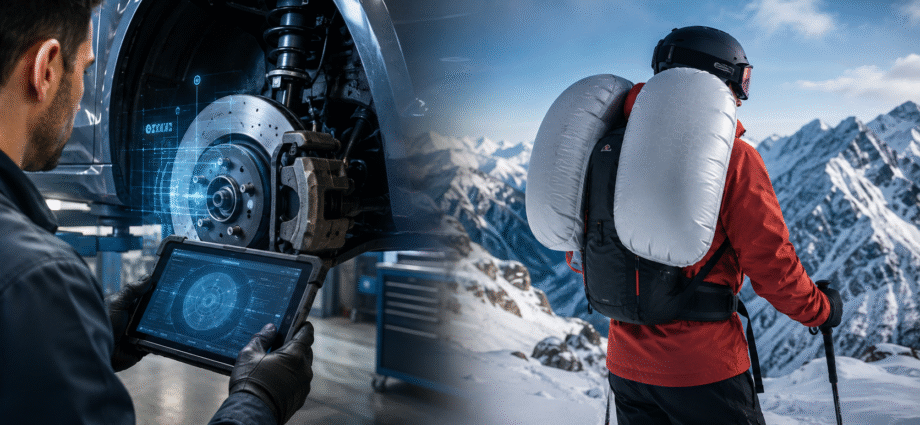
The term ABS Testauslösung can be confusing because it applies to two very different safety systems. In winter sports, ABS is associated with avalanche airbag backpacks designed to help a person remain closer to the surface during an avalanche. In the automotive world, ABS means the anti-lock braking system, which helps prevent a vehicle’s wheels from locking during sudden or forceful braking. In both cases, a test activation checks whether important components respond correctly before they are needed in a real emergency. However, the equipment, procedure, risks, and maintenance requirements are completely different. Understanding the correct meaning of ABS Testauslösung is therefore essential before attempting any kind of system test.
What Does ABS Testauslösung Mean?
In simple terms, ABS Testauslösung means a controlled test activation of an ABS-related safety system. For an avalanche backpack, it usually means pulling the activation handle to check whether the airbags deploy properly. It also gives the user a chance to experience the force needed to operate the handle. For a vehicle, the phrase can refer to an electronic actuator test in which diagnostic equipment activates the ABS hydraulic pump and valves. The purpose is to identify faults, confirm component operation, or assist with bleeding the braking system. Because the same term is used in two separate technical areas, users should first determine which system is being discussed before following any instructions.
ABS Testauslösung for an Avalanche Airbag
An avalanche airbag is a specialised backpack used by skiers, snowboarders, mountain guides, and other people travelling through avalanche-prone terrain. When the activation handle is pulled, one or more large airbags inflate around the user. Their increased volume may help the person remain nearer the surface of moving snow. However, an airbag cannot stop an avalanche, prevent every injury, or guarantee survival. It is only one part of a wider safety plan that should include proper training, route planning, current avalanche information, a transceiver, a probe, and a shovel.
A test activation helps users become familiar with the system before an emergency occurs. Pulling the handle for the first time during an avalanche would be extremely stressful. Practising in a safe and controlled environment teaches the user where the handle is located, how it feels, and how much force is required. This physical familiarity may make the response faster and more natural in a dangerous situation. The test also allows the owner to observe whether the airbags open fully and whether the system makes any unexpected sounds.
Why Should an Avalanche Airbag Be Tested?
An avalanche backpack may look perfectly normal while still having hidden problems. Storage conditions, moisture, dirt, material ageing, damaged fasteners, worn seals, or an incorrectly installed cartridge can affect its performance. An ABS Testauslösung can reveal some of these issues by showing whether the airbag deploys fully and holds its shape. If the airbag opens slowly, remains partly folded, loses pressure, or fails to deploy, the equipment should not be used until it has been inspected by an authorised professional.
Many manufacturers recommend a general inspection before every winter season. Whether that inspection must include a complete test deployment depends on the model and its instructions. Some modern systems include a training mode or a mechanical mechanism that can be reset without consuming a gas cartridge. Traditional compressed-gas systems may empty the cartridge during activation, meaning it must be refilled or replaced afterward. Owners should never assume that two airbag models work in the same way.
Preparing for an Avalanche Airbag Test
Before performing the test, carefully read the manufacturer’s instructions for the exact backpack model. Check the cartridge, activation handle, airbag compartment, fasteners, and visible fabric for damage. If the system uses a cartridge, make sure it is correctly filled, within its service period, and installed as directed. Some cartridges can be checked by weight, while others have a pressure indicator. Any uncertainty should be resolved through the manufacturer or an approved service centre.
The backpack should be placed or worn in an open area where the inflating airbag cannot hit furniture, walls, lights, or people. Once activated, observe whether all sections inflate correctly. Afterward, inspect the airbag for pressure loss, tears, loose seams, or damaged valves. The system must then be reset and folded exactly as described in the manual. Incorrect folding can restrict future deployment. A training test is useful, but it does not replace a full professional service, especially for older equipment or a backpack that has been used in an actual avalanche.
ABS Testauslösung in a Vehicle
In a vehicle, ABS stands for anti-lock braking system. Its main job is to stop the wheels from remaining locked during heavy braking. Wheel-speed sensors continuously send information to the control unit. If the system detects that one wheel is about to stop rotating while the vehicle is still moving, hydraulic valves rapidly adjust the brake pressure. This action can help the driver maintain steering control, although road conditions, tyres, speed, and driver behaviour still affect the stopping distance.
A vehicle ABS Testauslösung is usually performed with a professional diagnostic scanner. The process is often called an actuator test, active test, or bidirectional control test. The scanner communicates with the ABS control module and commands the hydraulic pump or individual solenoid valves to operate. A technician may hear clicking, humming, or vibration during the procedure. These sounds can indicate that the components are receiving commands, but they do not automatically prove that the entire braking system is free from faults.
Why Is an Automotive ABS Test Performed?
An actuator test is commonly used when the ABS warning light remains illuminated, a diagnostic trouble code has been recorded, or a technician suspects that the pump or valves are not operating correctly. It can help separate an electrical control problem from a mechanical or hydraulic fault. However, the results must be considered together with stored fault codes, live sensor data, wiring checks, brake-fluid condition, and a physical inspection.
Not every ordinary OBD2 scanner supports ABS Testauslösung. Basic code readers may only access engine information. A suitable scanner must support the vehicle’s make, model, year, and specific ABS module. Even advanced diagnostic equipment cannot compensate for a lack of technical knowledge. Sending the wrong command, ignoring the manufacturer’s procedure, or working on an unsafe braking system may create additional faults or reduce braking performance.
ABS Testauslösung During Brake Bleeding
The test can also play an important role in ABS brake bleeding. Air may enter the braking system after certain repairs, component replacement, or improper fluid servicing. Standard bleeding can remove air from the brake lines, but air trapped inside the ABS hydraulic control unit may remain behind closed valves. A compatible diagnostic tool can cycle the pump and open the valves so that the trapped air moves into areas where it can be removed through the normal bleeding process.
The correct order and procedure vary between vehicles. Some models require repeated cycles of diagnostic activation and manual bleeding, while others use an automated service routine. Brake fluid must also meet the vehicle manufacturer’s specifications. Because mistakes may produce a soft pedal or reduced braking power, this work is best handled by a trained mechanic. If the brake pedal feels unusual after maintenance, the vehicle should not be driven until the system has been professionally inspected.
Can ABS Be Tested by Hard Braking?
Drivers may feel ABS working during a forceful stop because the brake pedal can pulse or vibrate. However, deliberately performing an emergency stop on a public road is dangerous and should not be treated as a reliable diagnostic method. It may surprise other drivers, cause a collision, or lead to a loss of control on an unsuitable surface. Any controlled driving test should only occur in a legally approved, traffic-free area under appropriate supervision.
A hard-braking test also provides limited information. Pedal pulsation may show that the system is responding, but it cannot identify an intermittent sensor fault, damaged wiring, stored error code, or weak hydraulic component. If the ABS warning light is on, the safest approach is to have the vehicle scanned and inspected. A red brake warning light, fluid leak, unusually soft pedal, grinding noise, or significant loss of braking performance requires immediate professional attention.
Important Safety Considerations
Both meanings of ABS Testauslösung involve equipment intended to protect life. Users should avoid unofficial modifications, unsuitable replacement parts, and improvised test procedures. An avalanche airbag test should follow the backpack manufacturer’s instructions, while an automotive ABS test should follow the vehicle’s approved diagnostic process. A successful activation confirms only certain functions at that moment; it does not guarantee that every component is in perfect condition.
It is also important to remember that technology supports safe behaviour but cannot replace it. An avalanche airbag does not replace training and rescue equipment. Vehicle ABS does not replace good tyres, proper maintenance, safe speed, and adequate following distance. Testing is most useful when it forms part of a complete and responsible safety routine.
Frequently Asked Questions
1. What is ABS Testauslösung?
ABS Testauslösung is a controlled activation used to check an ABS-related safety system. It may refer to deploying an avalanche airbag or electronically testing a vehicle’s ABS pump and valves.
2. Does an avalanche airbag cartridge get used during testing?
It depends on the model. Traditional gas systems may empty the cartridge, while some newer systems offer a reusable training or reset function. Always check the product manual.
3. Can I perform a vehicle ABS actuator test myself?
Only if you have the correct diagnostic equipment, technical knowledge, and manufacturer instructions. Because the braking system is safety-critical, professional assistance is generally recommended.
4. Why does the ABS warning light remain on?
Possible causes include a damaged wheel-speed sensor, broken wiring, low voltage, a faulty control module, or a hydraulic pump problem. A diagnostic inspection is required to identify the exact cause.
5. Does a successful test replace regular maintenance?
No. Test activation checks only selected operations. Ageing materials, seals, brake fluid, wiring, valves, cartridges, and other components still require routine inspection and maintenance.
Conclusion
ABS Testauslösung describes two different but important safety checks. For an avalanche airbag, it helps confirm deployment and teaches the user how to activate the system quickly. For a vehicle, it allows a technician to test ABS components or support the brake-bleeding process. Both procedures must be performed according to the relevant manufacturer’s instructions. A successful test can reveal faults and improve preparedness, but it never replaces professional maintenance, proper training, or responsible behaviour.
READ MORE: clocktimes