
The idea of a space force orbital warship carrier represents one of the most ambitious shifts in modern defence thinking. While it is not a traditional “warship” in the cinematic sense, the concept reflects a rapidly evolving approach to space operations where orbiting platforms could function as pre-positioned hubs for launching, storing, and deploying satellites on demand. As global reliance on space-based systems increases, military strategists are exploring ways to ensure faster response times, improved resilience, and greater control over orbital assets.
Unlike conventional rockets that require Earth-based launches with long preparation cycles, the space force orbital warship carrier is envisioned as a persistent structure in orbit capable of releasing spacecraft when needed. This idea is closely tied to the broader doctrine of tactically responsive space, which emphasises speed, flexibility, and readiness in orbital environments. Although still largely conceptual and experimental, the implications of such a system are already influencing defence innovation programs and shaping the future of space infrastructure.
What is a Space Force Orbital Carrier?
The space force orbital warship carrier can best be described as an orbital platform designed to function like a mobile base in space. Instead of carrying weapons in the traditional sense, it would carry satellites, inspection drones, or defensive space assets that can be deployed rapidly. The term “warship carrier” is largely metaphorical, drawing parallels to naval aircraft carriers that project power by launching smaller vehicles.
At its core, this concept emphasises orbital deployment efficiency. The platform would remain stationed in low Earth orbit or another strategic orbit, waiting for mission commands. When needed, it could deploy preloaded spacecraft to replace damaged satellites, reposition assets, or address emerging threats.
This approach significantly reduces the time between decision-making and action compared to Earth-launched systems.
The space force orbital warship carrier is also tied to advancements in modular spacecraft design. Instead of building single-purpose satellites, future systems may rely on interchangeable units stored aboard orbital carriers. This would allow operators to maintain a flexible and scalable space architecture that adapts to evolving mission needs.
Strategic Purpose and Military Significance
The strategic value of the space force orbital warship carrier lies in its ability to transform satellite resilience and improve operational responsiveness. Modern military operations depend heavily on satellites for communication, navigation, reconnaissance, and surveillance. If these systems are disrupted or destroyed, operational capabilities can be severely impacted.
By maintaining a pre-positioned orbital platform, defence organisations aim to ensure the continuous availability of replacement satellites. This concept enhances space-based logistics, allowing forces to maintain orbital superiority even under contested conditions. Instead of waiting days or weeks for a rocket launch, replacement assets could theoretically be deployed within hours.
Another key motivation is deterrence. A visible and operational space force orbital warship carrier network could discourage adversaries from targeting satellites, knowing that replacements can be rapidly deployed. This contributes to strategic stability by reducing the effectiveness of anti-satellite operations and improving redundancy across orbital systems.
Additionally, the system aligns with broader defence priorities such as tactically responsive space, where rapid adaptation is essential. As space becomes increasingly congested and competitive, responsiveness may become just as important as raw technological capability.
Technology and Architectural Design Concepts
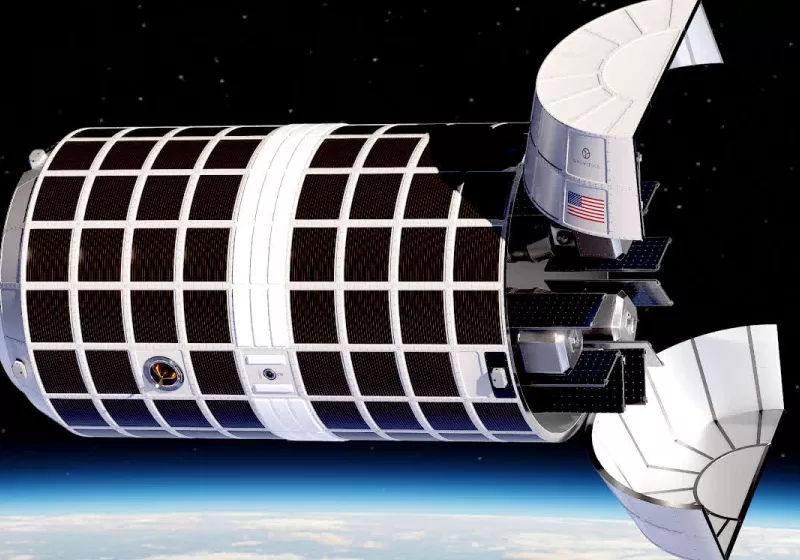
The engineering behind a space force orbital warship carrier would be significantly more complex than traditional satellites. It would function as a hybrid between a space station, a logistics hub, and a spacecraft deployment system. Its design would likely feature modular storage bays, robotic arms, docking systems, and advanced propulsion for orbital manoeuvring.
One of the key challenges is maintaining a stable long-term orbit while carrying heavy payloads. The carrier would require highly efficient propulsion systems to counter orbital decay and to reposition itself when necessary. It would also depend on autonomous systems capable of managing satellite inventory, monitoring payload health, and executing deployment commands with minimal human intervention.
Another important feature would be orbital docking compatibility, allowing different generations of satellites to integrate seamlessly. This would enable the carrier to evolve without needing full replacement. In addition, advanced thermal regulation and radiation shielding would be required to protect onboard systems and stored spacecraft from the harsh space environment.
The idea also integrates heavily with automation and robotics. Since human presence in orbit is limited, robotic systems would handle loading, maintenance, and deployment operations. This reduces operational risk while improving efficiency in managing space-based logistics.
Challenges and Limitations
Despite its strategic appeal, the space force orbital warship carrier faces significant technical and financial challenges. One of the biggest hurdles is the launch cost. Deploying a large, fully functional orbital platform would require multiple heavy-lift rocket missions, making it extremely expensive and logistically complex.
Another major issue is vulnerability. Although positioned in space, such a platform could still be targeted by anti-satellite technologies or space debris. Ensuring satellite resilience for the carrier itself would require advanced shielding and defensive countermeasures, which add further complexity and cost.
Orbital congestion also presents a challenge. With thousands of satellites already in low Earth orbit, adding large carrier platforms increases the risk of collision and debris generation. Careful orbital management would be essential to avoid contributing to the growing problem of space junk.
Finally, international regulation remains uncertain. The deployment of a space force orbital warship carrier could raise geopolitical concerns, as other nations may interpret it as a militarisation of space. This could lead to diplomatic tensions and accelerate competition in space-based defence systems.
Future Implications of Orbital Carrier Systems
If developed successfully, the space force orbital warship carrier could fundamentally reshape how nations approach space operations. It could enable persistent orbital readiness, where spacecraft are no longer dependent solely on Earth-based launches. This would mark a transition toward continuous space presence supported by advanced logistical networks.
In the long term, these systems could serve both military and civilian purposes. Beyond defence, they could assist in satellite repair, debris removal, and rapid deployment of scientific instruments. This dual-use potential makes the concept particularly significant in shaping future space economies.
As technology advances, we may also see integration with artificial intelligence for autonomous decision-making and mission execution. Combined with orbital deployment systems, this could create highly responsive and self-sustaining space infrastructures.
Ultimately, the space force orbital warship carrier represents a shift toward treating space as an active operational domain rather than a passive environment. Whether or not fully realised in its most ambitious form, its underlying principles are already influencing how nations design next-generation space capabilities.
FAQs
1. What is a Space Force orbital carrier?
It is a conceptual orbital platform designed to store and deploy satellites rapidly in space, acting like a logistics hub rather than a traditional weapon system.
2. Is the Space Force orbital warship carrier already operational?
No, it remains in the experimental or conceptual stage, with ongoing research focused on enabling technologies rather than full deployment.
3. Why is it called a “warship carrier” if it is in space?
The term is metaphorical, comparing its function to naval aircraft carriers that deploy smaller vehicles for missions.
4. What are the main benefits of such a system?
It improves tactically responsive space capabilities, enhances satellite resilience, and reduces the time needed to replace or deploy orbital assets.
5. What are the biggest challenges?
High costs, orbital congestion, vulnerability to space debris, and geopolitical concerns are among the major obstacles.
Conclusion
The concept of the space force orbital warship carrier reflects the next stage of evolution in space strategy, where speed, flexibility, and resilience become the defining characteristics of orbital operations. While still largely conceptual, it highlights the growing importance of space-based logistics and rapid-response infrastructure in modern defence planning. As nations continue to expand their presence in orbit, such platforms could play a central role in shaping the future balance of power in space, transforming how humanity builds, maintains, and protects its extraterrestrial assets.
READ MORE: clocktimes