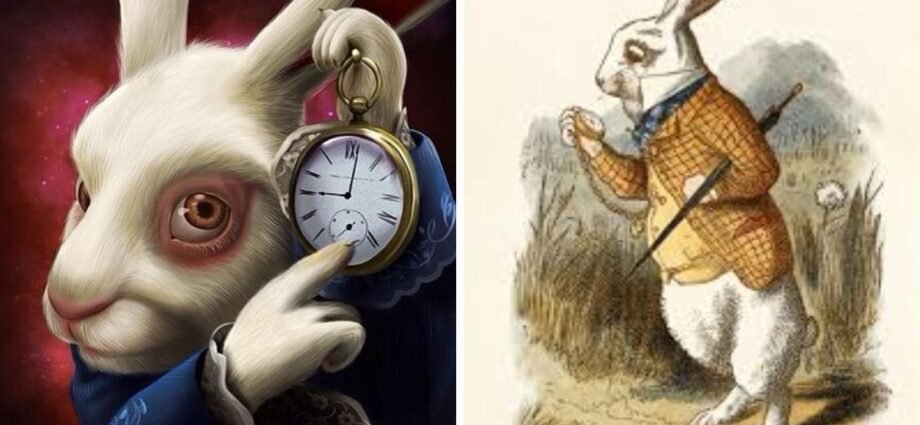
The rabbit with a clock is one of the most recognisable symbols in literary history, instantly associated with urgency, curiosity, and the passage of time. This character is famously known as the White Rabbit from Lewis Carroll’s Alice’s Adventures in Wonderland, first published in 1865. He is not just a simple fictional animal but a deeply symbolic figure that has transcended literature to become a cultural icon. Always seen in a hurry, checking his pocket watch, and repeating phrases like “Oh dear! Oh dear! I shall be too late!”, he represents more than just a character in a fantasy story.
The rabbit with the clock reflects human anxiety about schedules, deadlines, and the constant pressure of time. Over the years, this character has been reinterpreted in films, illustrations, and modern media, making him a timeless figure in storytelling and pop culture.
Who is the Rabbit with the Clock?
The rabbit with a clock refers to the White Rabbit, a fictional character who appears in Alice’s Adventures in Wonderland. He is portrayed as a talking rabbit dressed in Victorian-style clothing, usually wearing a waistcoat and carrying a pocket watch. His most defining trait is his constant fear of being late, which drives his frantic behaviour throughout the story. Unlike other whimsical characters in Wonderland, the White Rabbit feels strangely grounded in real-world concerns, especially time management and responsibility.
This makes him relatable even today, as many readers see him as a reflection of their own busy lives. His appearance at the beginning of Alice’s journey marks the moment she leaves ordinary reality and enters a world of imagination and chaos.
Origin in Alice in Wonderland
The rabbit with the clock originates from Lewis Carroll’s imaginative novel Alice’s Adventures in Wonderland. In the story, Alice notices the White Rabbit speaking to himself and checking his watch before suddenly disappearing into a rabbit hole. Curious, she follows him, which leads her into the magical world of Wonderland. This moment becomes the catalyst for the entire adventure.
The rabbit’s role may seem small, but it is essential, as he indirectly triggers Alice’s journey of self-discovery. Carroll designed the White Rabbit to contrast the logic of Victorian society with the absurdity of Wonderland. While everything in Wonderland is irrational, the rabbit’s obsession with time reflects strict social discipline, making him a bridge between order and chaos.
Personality and Symbolism
The rabbit with the clock is more than a quirky character; he carries deep symbolic meaning. His personality is defined by nervous energy, impatience, and constant worry. He is constantly rushing ahead, repeatedly glancing at his watch, and living in fear of falling behind on something important.
This behaviour has led to many interpretations of him as a symbol of modern anxiety. In a broader sense, he represents how humans often feel controlled by time, schedules, and expectations.
The pocket watch he carries symbolises structured time and societal pressure. At the same time, his behaviour introduces readers to the idea of urgency that drives the narrative forward. Despite his anxiety, he is not malicious or dangerous; instead, he is a mirror of human stress and responsibility.
Visual Depictions across Adaptations
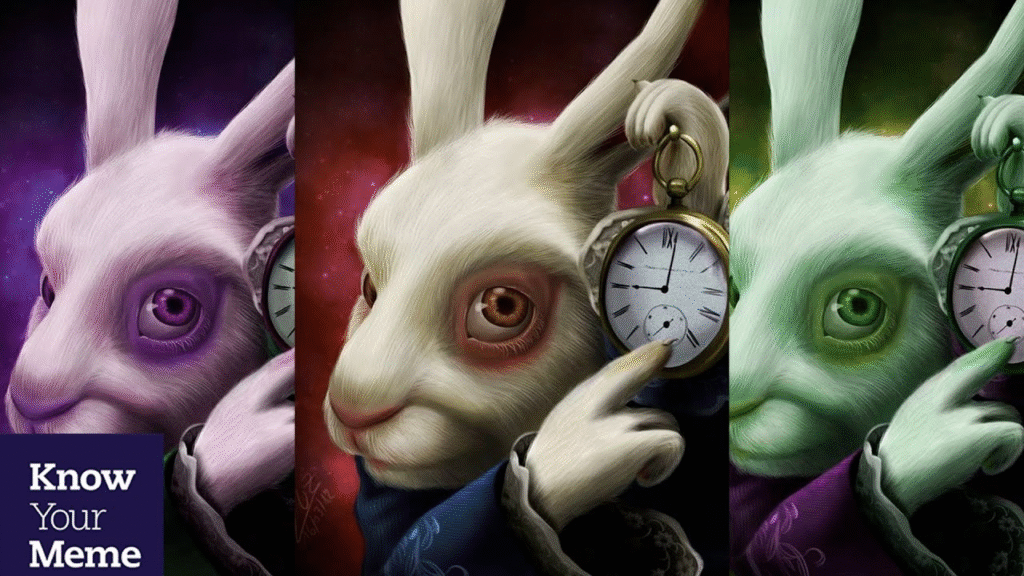
Over time, the rabbit with a clock has been visually reimagined in many forms. In the original illustrations by Sir John Tenniel, he appears as a realistic rabbit dressed in Victorian clothing, holding a detailed pocket watch. This version is calm in design but expressive in posture. In the Disney adaptation of Alice in Wonderland (1951), he becomes more animated, colourful, and exaggerated, with a red waistcoat and larger expressions that emphasise his panic. In modern reinterpretations, including darker fantasy versions, the rabbit with a clock is often portrayed as surreal or slightly eerie, sometimes with glowing eyes or distorted features.
These variations show how flexible the character is, adapting to different artistic styles while maintaining his core identity as a time-obsessed figure.
Cultural Impact and Modern Interpretations
The rabbit with the clock has had a major influence on global culture. He appears in literature, films, fashion, music, and even psychological discussions. One of the most famous references is the phrase “Follow the white rabbit,” popularised by modern cinema, which suggests entering a new or hidden reality. This idea has made the character a symbol of curiosity and transformation. In internet culture, he is often used to represent procrastination, deadlines, or the feeling of being overwhelmed by time. Artists also use him as a metaphor for escaping reality or questioning structured systems. His influence shows how a literary character can evolve into a universal symbol that resonates across generations and cultures.
Psychological and Philosophical Meaning
The rabbit with a clock also holds psychological significance. Many interpretations suggest that he represents time anxiety, a condition where individuals feel constant pressure from deadlines and future obligations. His behaviour reflects the human tendency to worry about not having enough time, even when no immediate threat exists. In this sense, the White Rabbit becomes a philosophical symbol of human limitation and awareness.
Why the Rabbit with Clock Still Matters Today
In today’s fast-paced world, the rabbit with a clock remains highly relevant. He represents the struggle to balance time and life, something nearly everyone experiences. His continued presence in the media shows that audiences still connect with his symbolic meaning. Whether seen in films, art, or memes, the White Rabbit continues to reflect the pressures of modern society while also reminding us of curiosity and imagination. His role as both a guide and a warning makes him a timeless figure in storytelling.
FAQs
1. Who created the rabbit with a clock?
The rabbit with a clock, known as the White Rabbit, was created by Lewis Carroll in his novel Alice’s Adventures in Wonderland, published in 1865.
2. Why is the White Rabbit always in a hurry?
He is constantly worried about being late, which symbolises human anxiety about time, schedules, and responsibilities.
3. What does the rabbit with the clock represent?
He represents urgency, time pressure, and the emotional stress people feel in structured societies.
4. Why does Alice follow the rabbit?
Alice follows him out of curiosity when he disappears into a rabbit hole, which leads her into the magical world of Wonderland.
5. How is the rabbit with a clock used in modern culture?
He appears in films, art, and media as a symbol of curiosity, time pressure, and sometimes as a metaphor for entering new realities.
Conclusion
The rabbit with the clock is far more than a minor literary character; he is a powerful symbol that continues to resonate across generations. From his origins in Alice’s Adventures in Wonderland to modern cultural interpretations, he represents the universal human experience of time pressure and curiosity. His constant urgency reminds us of the stress of modern life, while his role in guiding Alice into Wonderland symbolises the beginning of exploration and imagination. Even today, the White Rabbit remains a timeless figure, reflecting both the anxiety and wonder of human existence.
READ MORE: clocktimes